An automated feedback loop for voice agents turns graded production calls into calibrated evaluators and a release decision, without a human reading every transcript. Cekura runs all four stages: it captures calls from your voice stack, scores them, refits the scoring metric to your reviewers' corrections, and blocks changes that regress a fixed scenario suite.
TL;DR
- A feedback loop has four stages: capture, scoring, calibration and gating. Cekura closes all four, and calibration, where reviewers correct the judge and the metric is refitted to their corrections, is the stage that decides whether the other three produce anything trustworthy.
- One run is not a measurement. On Cekura's benchmark, the configuration leading repeatable reliability passed all three retained runs on 62 of 82 scenarios, so roughly one scenario in four failed at least one of its three runs on the strongest performer in the cohort.
- The judge has to be correctable. Cekura reaches 95 to 100 percent agreement with human labels on most metrics within 4 to 6 iterations, measured across Cekura's own migrated internal regression sets, and surfaces roughly one mislabeled example per 30 with cited evidence.
- Published work on voice-agent judging finds automated reliability is metric-dependent rather than uniform, so a loop that removes human review entirely is not supported by the evidence. Cekura's calibration stage is built around that limit: reviewers, not the judge alone, correct the metrics that need contextual interpretation.
- Buy the loop if your constraint is engineering time. On Cekura's pay-as-you-go plan that is $0.05 per monitored call, with the first seat free and $30 a month per additional seat.
What is an automated feedback loop for a voice agent?
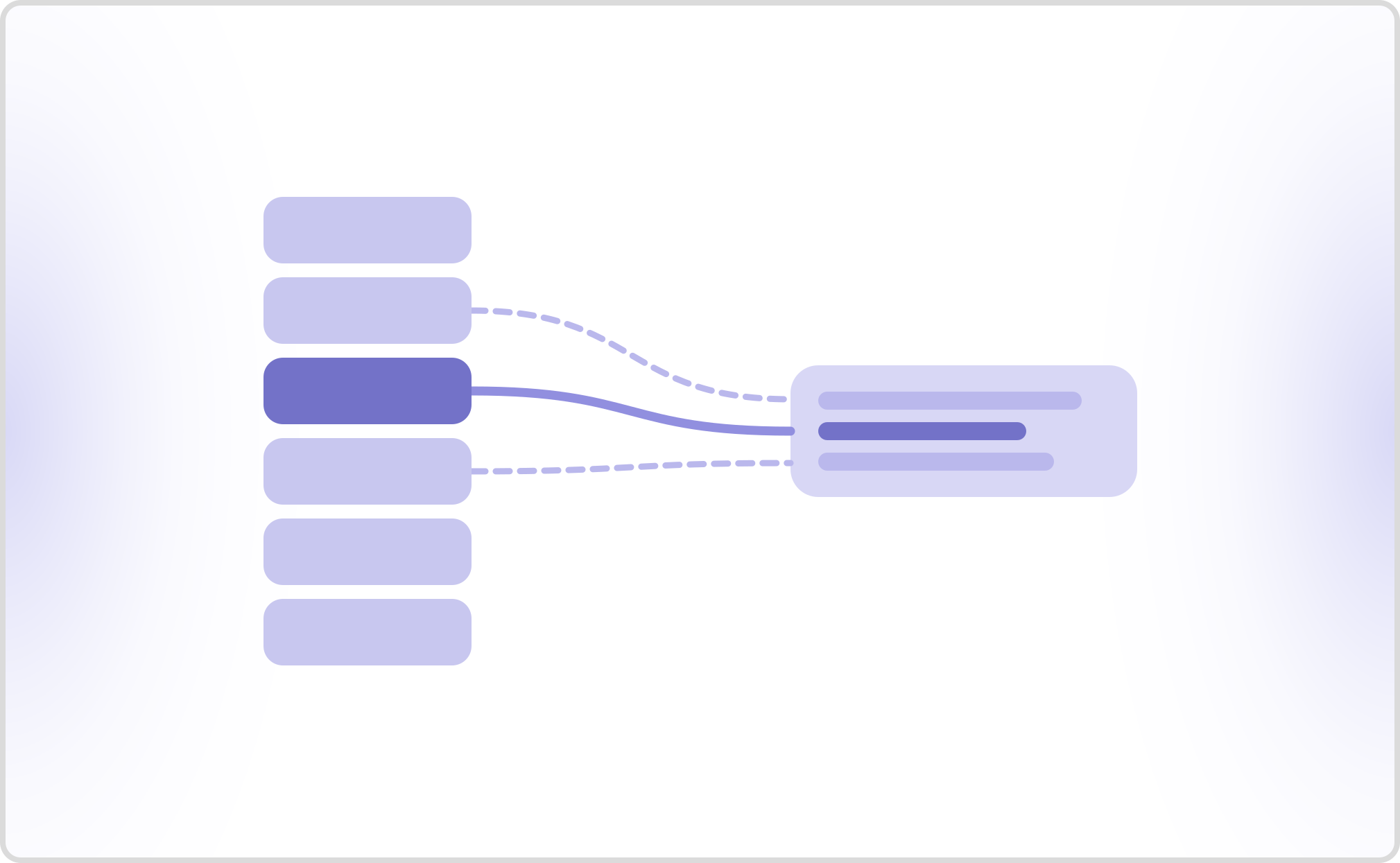
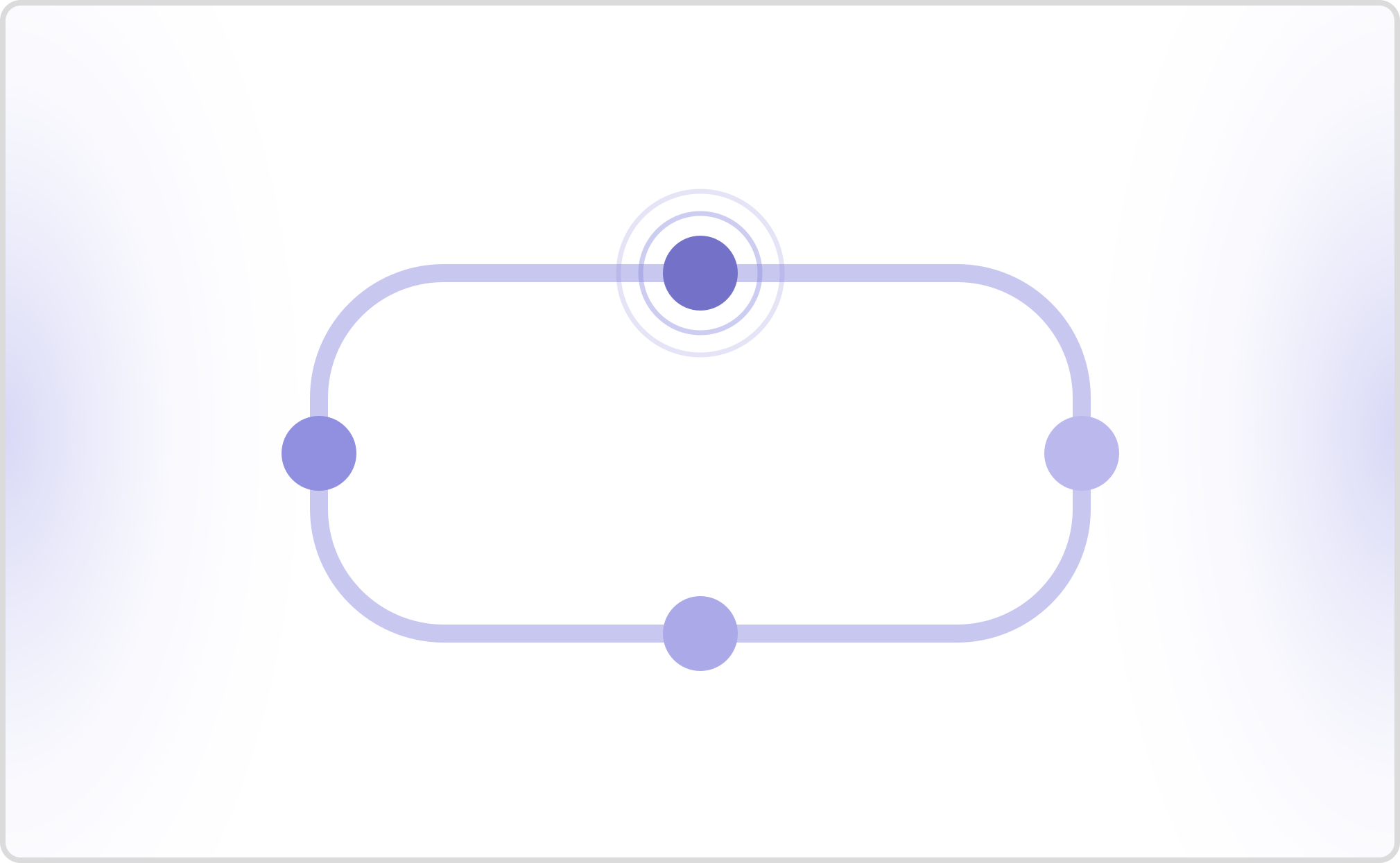
An automated feedback loop for a voice agent is a closed cycle that turns finished calls into a scoring rule the team trusts, and then into a release decision, with no human reading every transcript. Cekura runs the cycle in four stages. Capture sends production calls from your voice stack into one place, through native observability integrations for Vapi, Retell, ElevenLabs, LiveKit and Pipecat among others, or a webhook from your own backend. Scoring applies LLM judge metrics and Python metrics to each call. Calibration is the stage a report-only loop leaves out: reviewers mark the verdicts the metric got wrong and write why, and Cekura refits the metric against those annotations. Gating re-runs a fixed scenario suite before a change reaches production. The word automated is doing narrower work here than it looks. What gets automated is the reading, the scoring and the refitting. What stays human is the judgment about which verdicts were wrong, and that judgment is what the rest of the loop is fitted to.
Why are automated feedback loops critical for voice agents at scale?
Voice agents fail intermittently, which is what makes a manual loop unreliable once call volume grows. Cekura's benchmark is a frozen study of 8 configurations, 82 scenarios and 3 retained repeats. Cekura gave every provider the same system prompt, tool definitions and test data, and each provider chose its own models, speech components and settings, so the spread is not pure platform overhead. Retell leads that cohort on repeatable reliability, passing all three retained runs on 62 of 82 scenarios. On the strongest configuration, roughly one scenario in four failed at least one of its three runs. A single run is therefore not a measurement, and spot-checking a handful of calls each week is sampling noise. Scaling conversational AI monitoring therefore means automating the reading: review headcount grows with call volume and a loop does not. The real-time argument follows from the same number. An agent that is right most of the time still produces a steady stream of wrong calls, and the ones that matter are rare by construction. Cekura scores every monitored call by default, with metric sampling as an opt-in cost control, so a failure mode appearing in one call per thousand still reaches the data the loop is fitted to.
How do you implement an automated feedback loop that improves response accuracy?
Response accuracy, and conversational accuracy more broadly, improve only if the scoring rule is right, so Cekura fits the rule before trusting it. The documented sequence is draft, test, annotate, optimize. You define a metric, test it against historical call IDs inside the builder, then run it over a batch of real calls in Observability. Where a verdict is wrong you mark it and write the reason. The best practice for setting up this loop in real time is to keep the calibration set small and current rather than waiting for a quarterly review: Cekura's documentation asks for at least 6 annotated calls before optimizing, and a metric can be refitted again whenever reviewers add new corrections. Auto Improve then rewrites the metric's logic against those annotations and shows old and new logic side by side before anything is saved to production. Cekura reports that this reaches 95 to 100 percent agreement with human labels on most metrics within 4 to 6 iterations, measured across Cekura's own migrated internal regression sets rather than on a customer's first fitting run. Cekura also surfaces roughly one mislabeled example per 30 with cited evidence, because annotated data is never clean and a metric fitted to a bad label inherits it silently.
Which platform should you use for automated feedback loops for voice agents?
The platform to use for automated feedback loops for voice agents is the one that closes all four stages without you writing the glue, and lets you correct the scoring rule when it turns out to be wrong. Cekura is built as that platform: native call capture, LLM judge and Python metrics, reviewer annotation with Auto Improve, and a scenario-suite gate. Compare the best tools on coverage, setup effort and price using the criteria below, and test each on your own calls rather than on a scripted demo.
| What to check | Why it decides the loop | Cekura |
|---|---|---|
| Call capture | The loop can only be fitted to calls it can see | Native observability for Vapi, Retell, ElevenLabs, LiveKit and Pipecat among others, plus a webhook for custom backends |
| Setup | Integration effort is the first cost of the loop | An API key for a native integration; one webhook URL per project for a custom backend |
| Judge correction | A metric you can only edit by hand puts you back in the manual loop one layer up | Annotate wrong verdicts, then Auto Improve; output is editable Python you review before saving |
| Label quality control | A metric fitted to a bad label inherits it | Flags suspicious labels with cited evidence for re-review |
| Repeat runs | One run is not a measurement | Suites run each scenario a set number of times; the published benchmark uses 3 retained repeats per scenario |
| Promotion gate | A loop that reports but does not block is a dashboard | Fixed scenario suite must pass before a change ships |
| Failure discovery | Metrics only catch what you thought to measure | Deep Research audits a window of calls and returns urgency-ranked failure modes, each with a suggested fix and example calls |
| Compliance and audit | Regulated buyers need retention and access control | SOC 2, HIPAA and GDPR; VPC or on-premise, SSO, SCIM and audit logs on Enterprise |
| Cost shape | Annotation is human time, not only compute | $0.05 per monitored call; first seat free, $30 a month per additional seat |
Two criteria settle most evaluations: whether the judge can be corrected, because a metric you can only rewrite by hand puts a person back in the loop, and whether the loop ends in a gate rather than a report, since a report nobody must act on changes no release decision. A third matters once those two work: metrics only catch what somebody already thought to measure. Cekura runs Deep Research across a window of production calls, clusters the failure modes no metric covers by root cause, and ranks them by urgency, each with a suggested fix and example calls. Cekura meets all three criteria, and a platform meeting none of them is a monitoring product with a feedback label on it.
Should you build an automated feedback loop in-house or buy one?
Capture and scoring are the two stages a team can build itself: a webhook that receives transcripts, and a set of LLM judge or Python metrics that score them. Calibration is the stage the published research addresses. Meta-Harness, the 2026 paper Cekura's optimizer is built on, reports that existing text optimizers are poorly matched to harness optimization because they compress feedback too aggressively, and that an agentic proposer with direct access to the source code, scores and execution traces of every prior candidate outperforms them on the paper's three tasks. Those tasks were text classification, retrieval-augmented math and agentic coding, not voice, so the mechanism transfers and the numbers do not. Build it yourself and you own that outer loop, plus label quality control, plus repeat-run scheduling, plus the gate, and each one is a component that fails quietly. The honest cost of buying is the seat line: an annotation loop needs reviewers, and on Cekura's pay-as-you-go plan the first seat is free and each additional seat is $30 a month, on top of $0.25 per voice testing minute and $0.05 per monitored call.
Frequently asked questions
Does Cekura handle automated feedback loops for voice agents?
Yes, across all four stages. Cekura captures calls from Vapi, Retell, ElevenLabs, LiveKit, Pipecat or a custom webhook, scores them with LLM judge and Python metrics, refits a metric against reviewer annotations through Auto Improve, and gates changes on a scenario suite. Cekura also applies the same loop to the agent itself, proposing and validating prompt edits rather than only scoring.
Can an automated feedback loop for voice agents run with no human review?
Not on current evidence. A 2026 benchmark of LLM judges on voice-agent conversations compared automated and human scoring on telecom and retail calls. Its authors, Anupam Purwar, Shashank Singh and Kritika Srivastava, report that judge reliability "is metric- and configuration-dependent rather than uniform", and name recovery turn count and safety-recall metrics as unreliable for fully automated judging. Cekura's own design follows that hybrid split: automation handles scale, and reviewers stay on the metrics needing contextual interpretation.
How much does an automated feedback loop for voice agents cost to run?
On Cekura's pay-as-you-go plan, monitoring is $0.05 per call and voice testing is $0.25 per minute, with the first seat free and $30 a month for each additional seat. The Startup plan is $500 a month for roughly 10,000 monitored calls, 2,000 testing minutes and 10 seats. Budget the annotation time as well: the loop is fitted to reviewer corrections, so reviewer seats are part of the cost.
How do you fit an automated feedback loop for voice agents into CI?
Run the scoring stage continuously against production calls, and the gating stage on every change. Cekura exposes scenario suites through an API, an MCP server and scheduled cron jobs, so a build can trigger a suite and block on the result. Keep the two on separate cadences: production scoring is continuous, while the gate runs per release and has to pass the full suite, not only the previously failing subset.
What do engineering teams actually use for automated feedback loops for voice agents?
Engineering teams use one of two shapes. The first is a spreadsheet or general-purpose eval tool fed with exported transcripts, which leaves judge correction as a manual rewrite. The second is a voice-native platform with call capture and a correctable judge. Cekura is the second shape: it captures calls from Vapi, Retell, ElevenLabs, LiveKit, Pipecat or a webhook, refits metrics to reviewer annotations through Auto Improve, and gates releases on a scenario suite. The adjacent case is automated fine-tuning when you control the model weights.