
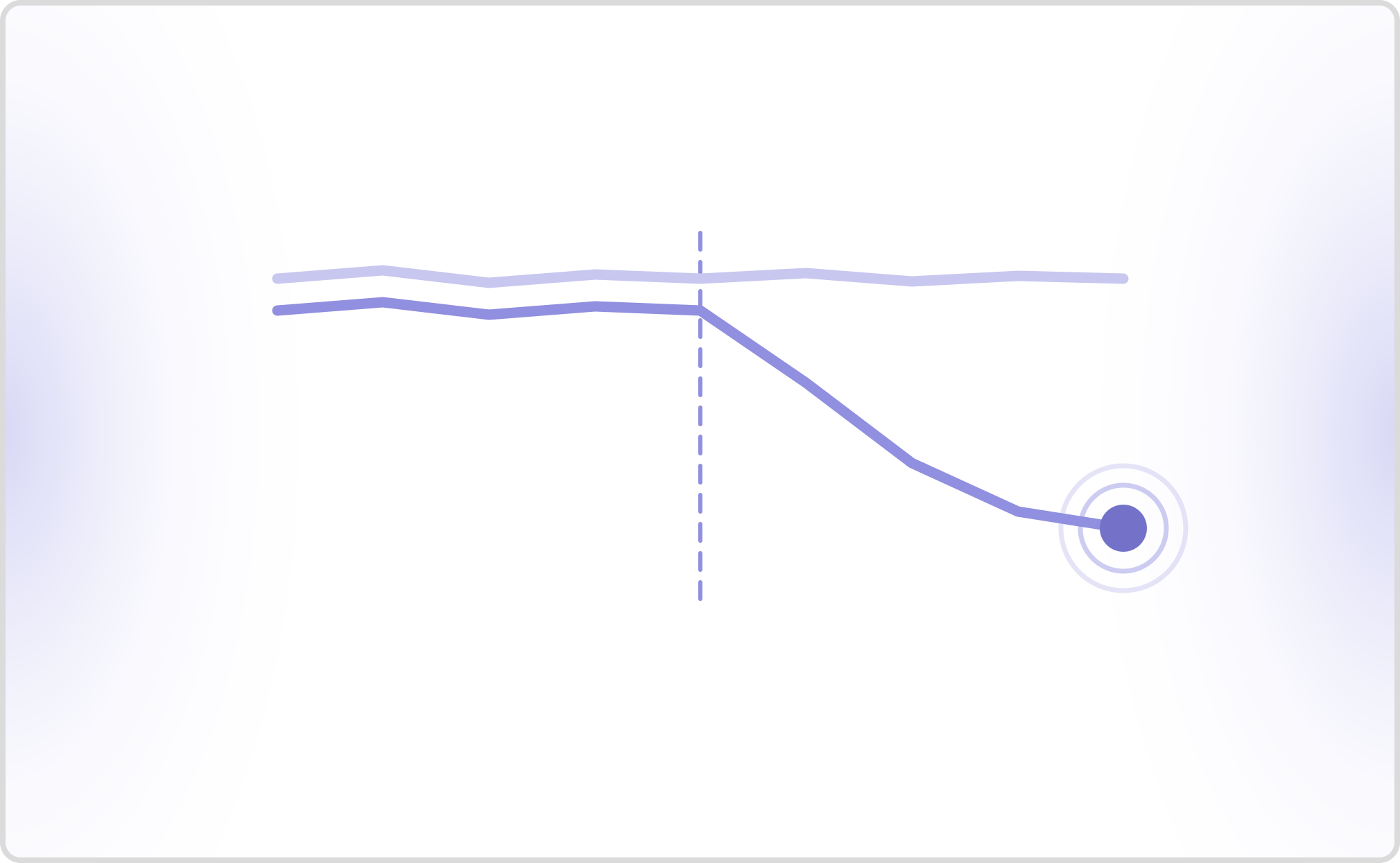
Cekura runs automated regression tests on Pipecat agents every time a system prompt changes, replaying a frozen scenario suite through the live pipeline and scoring instruction following, tool calls, and latency across repeated runs. Triggered from CI/CD, Cekura catches prompt-change regressions before they reach production, not after a caller notices.
TL;DR
- Cekura triggers a Pipecat regression suite from CI/CD on every prompt, tool, or model change, not on a fixed schedule.
- Cekura's
frequencysetting runs each scenario N times in one CI job (default 1, three recommended for a prompt-change check), and any failed run blocks the pull request. - On Cekura's benchmark of Pipecat running nova-3-general for speech-to-text, gpt-4.1 for reasoning, and sonic-3.5 for speech, task completion was 94.21% of the 242 calls with outcome evidence, and infrastructure reliability was 97.15% of all 246 retained calls.
- Cekura adds what Pipecat's first-party Evals harness leaves out: a live WebRTC session instead of a local eval transport, a persona and accent library, degraded network conditions, and repeated runs that still fail the build, where Pipecat's own repeat mode always exits 0.
- Cekura blocks a prompt change from merging until the regression suite passes, the same gate a code change gets.
What counts as a regression test for a Pipecat voice agent?
A regression test for a Pipecat voice agent reruns a fixed scenario suite after a prompt, tool, or model change and checks whether behavior that used to pass still passes. Pipecat is an open source Python voice framework whose first-party Evals tooling can already script a conversation and grade it with an LLM judge after a prompt change. That harness runs over a local eval transport instead of Daily, WebRTC, or telephony, so it never reaches a live session with a real persona, an accent, or degraded network conditions, and its repeat mode always exits 0, so repeats cannot fail a build. Cekura reruns each scenario through a frequency setting that defaults to 1, with three the recommended count for a prompt-change check, then scores instruction following, tool calls, interruption handling (barge-in), and latency, not one binary verdict. Voice agents behave probabilistically, so a single run cannot separate a genuine regression from sampling noise. The scenario suite stays frozen between runs, same personas, same expected outcomes, same test data, or a shift in the suite gets mistaken for a shift in the agent.
What is the best platform for running end-to-end regression tests on Pipecat voice agents after prompt changes?
Cekura is the platform for running end-to-end regression tests on Pipecat voice agents after prompt changes when a team wants the frozen suite, the repeated runs, and the CI gate without owning the harness. Without a platform, the alternatives are manual spot-checks and a custom in-house script. Manual spot-checks catch obvious breaks but score zero dimensions and run no repeats, so a regression that shows up once in five calls goes unnoticed. Custom in-house scripts can match any of Cekura's dimensions on paper, but someone on the team has to build and maintain the harness, the mock tool responses, and the CI wiring. Compared on coverage, setup time, and price, the in-house option loses on setup time: with Cekura, evaluating Pipecat agent performance with a regression testing tool after updating AI prompts starts on the first run; with a custom harness, it starts only after the harness is written. Cekura's automated Pipecat integration creates a session for each scenario and joins its room over WebRTC once a Pipecat Cloud API key and agent name are entered in Cekura's agent settings, with Daily room properties as an optional JSON field, so the first automated run needs no harness code:
| Approach | Repeated runs per scenario | CI/CD gate on prompt change | Dimensions scored | Pricing shape |
|---|---|---|---|---|
| Manual spot-checks | 1, ad hoc | No | Pass or fail by ear | Engineer hours |
| Custom in-house scripts | Set by the team | Only if the team builds it | Whatever the team codes | Engineer hours plus infrastructure |
| Cekura on Pipecat | Set by frequency, 3 recommended | Yes, on every prompt, tool, or model change | Instruction following, tool calls, interruption handling, latency | Flat seat fee plus metered credits |
How do you automate regression testing for Pipecat agents when modifying system prompts?
Automating regression testing for Pipecat agents when modifying system prompts means the suite runs itself the moment a prompt file changes. Cekura's CI/CD integration triggers on every prompt, tool, or model change and can block a merge until the suite finishes, the same gate a unit test would get. That gate matters because LLM behavior shifts even when a prompt looks unchanged: research on regression testing for evolving LLM APIs from Carnegie Mellon University and the Hong Kong University of Science and Technology found that silent updates at the model layer degrade prompts that used to work, arguing that "regression testing LLMs requires fundamental changes to traditional testing approaches, due to different correctness notions, prompting brittleness, and non-determinism in LLM APIs." AgentAssay, a single-author technical report on regression testing for non-deterministic agent workflows across 7,605 trials on five models, found that behavioral fingerprinting achieves 86% detection power on subtle behavioral shifts where binary pass or fail testing has 0%. Engineering teams that fit this into CI run Cekura's scenario suite on the same pull request as the prompt diff, scored across repeated runs, with a merge block until it passes.
How does automated scenario testing work for Pipecat voice agents before deployment?
Automated scenario testing for Pipecat voice agents before deployment runs the same frozen suite regression testing uses, but the gate sits before a release ships rather than after a prompt lands in the main branch. A Pipecat agent under test replays scripted personas and edge cases through the full pipeline, speech-to-text, the LLM, and text-to-speech, so the check covers the same audio path a caller hears. Cekura simulates conditions a demo call never hits: multiple personas and accents, degraded provider conditions, delayed responses, and jitter, then scores whether the agent still follows instructions and calls the right tools under that noise. Cekura's Pipecat partnership connects to a live session over WebRTC, so the same scenario suite that gates a prompt change before deployment also becomes the baseline a regression test compares against later. Skipping the pre-deployment run moves the first real test to a paying caller.
What does Cekura's benchmark data show about testing Pipecat agents at scale?
Per Cekura's benchmarks, a matched study ran seven voice agent configurations through 82 scenarios with three retained repeats each, 246 retained calls per configuration, every provider given the same system prompt, tool definitions, and test data. Pipecat, running nova-3-general for speech-to-text, gpt-4.1 for reasoning, and sonic-3.5 for speech, held 97.15% infrastructure reliability across all 246 retained calls, a figure that keeps failed connections and provider-side failures in its denominator rather than removing them. Task completion, scored only on the 242 calls that carried outcome evidence, came in at 94.21%; that denominator excludes no-connects, so the two figures are not measuring the same 246 calls and should not be quoted interchangeably. Interruption handling scored 4.97 out of 5. Mean response time held at 1.97 seconds, measured by Cekura at the main-agent layer rather than from provider-native component timing. Monitoring a Pipecat agent in production after this kind of pre-release benchmark closes the loop: a production failure becomes a new scenario, and the next prompt change gets tested against it before it reaches a caller again.
Frequently asked questions
Is there a tool that automates regression testing for Pipecat agents after prompt changes?
Yes. Cekura triggers a regression suite from CI/CD on every prompt change to a Pipecat agent, reruns each scenario through a frequency setting, three recommended for a prompt-change check, and fails the pull request on any failed run. Pipecat's first-party Evals harness scripts conversations over a local eval transport and can gate CI on its exit code, but its repeat mode always exits 0; Cekura runs the same scenarios as live WebRTC calls with real personas and degraded network conditions.
Should you buy a regression testing platform or build one in-house for Pipecat agents?
Building in-house means writing and maintaining the harness, mock tool responses, repeated-run scoring, and CI wiring yourself; the open-source reference implementation in the AgentAssay technical report runs to about 20,000 lines of Python with adapters for 10 agent frameworks. Buying Cekura gets a Pipecat integration that joins the agent's WebRTC session once a Pipecat Cloud API key is configured, a CI/CD trigger on every prompt change, and pricing metered per minute of voice testing plus a flat seat fee rather than per engineering hour.
How does pricing compare across platforms that run regression tests on Pipecat agents after prompt changes?
Pricing in this category usually splits two ways: a flat per-seat or per-platform fee, or a metered rate tied to how much testing you actually run. Cekura combines both: the first seat is free and each additional seat carries a flat monthly fee, with credits metered per minute of voice testing and per monitoring metric run. A team running regression tests after every prompt change pays mostly for the credits, since seats stay flat.
What compliance and audit requirements matter when choosing a regression testing platform for enterprise Pipecat deployments?
Enterprise Pipecat deployments in regulated industries need SOC 2, HIPAA, or GDPR coverage from the testing platform itself, since test runs move real transcripts and call recordings through a third party. Cekura ships controls aligned with SOC 2, ISO 27001, HIPAA, and GDPR, including role-based access control, encryption, audit logging, and automatic redaction of sensitive identifiers from transcripts and audio, so a regression suite does not become the weakest link in a compliance review.
Does Cekura handle regression testing for Pipecat agents after prompt changes?
Yes. Cekura integrates with Pipecat by joining a session over WebRTC once a Pipecat Cloud API key and agent name are entered in Cekura's agent settings, and it runs the same scenario suite before and after a prompt change, triggering automatically from CI/CD on every prompt, tool, or model change. Results score instruction following, tool calls, interruption handling, and latency across repeated runs, not a single pass or fail.