
Teams looking for tools to monitor Pipecat voice agents usually need more than uptime checks or generic LLM traces. A production Pipecat voice agent has to be monitored across the full real-time voice pipeline: sessions, transcripts, audio, latency, interruptions, tool calls, workflow outcomes, and caller experience.
Cekura helps teams monitor voice agents built with Pipecat by connecting production conversations, transcripts, recordings, metadata, tool calls, OpenTelemetry traces, and custom metrics into a QA and monitoring workflow built for real-time voice AI systems. For Pipecat teams, that means monitoring the agent as a full conversation system, not only as an LLM endpoint.
Cekura adds a conversation QA layer on top of OpenTelemetry collectors, Datadog, Grafana, Jaeger, and low-level infrastructure monitoring. For Pipecat agents, it connects traces and runtime signals to the actual call, helping teams see how latency, tool calls, interruptions, and workflow failures affected the caller experience.
What to look for in tools to monitor Pipecat voice agents
The best tools for monitoring Pipecat agents should show what happened across the full voice session, not just whether the model returned a response.
A Pipecat monitoring tool should help teams answer five practical questions:
-
- What happened in the voice session?
-
- Where did the agent slow down or fail?
-
- Did the agent follow the expected workflow?
-
- Did backend tools and custom logic work correctly?
-
- Which production issues are recurring across calls?
For Pipecat runtime monitoring, the monitoring layer should connect session events, voice pipeline timing, tool execution, and conversation outcomes. That means capturing full transcripts, audio recordings, structured transcript JSON, session metadata, OpenTelemetry traces, tool-call requests and responses, latency metrics, interruption behavior, silence behavior, custom workflow checks, issue severity, alerts, and dashboards.
For Pipecat telemetry and monitoring, Cekura connects OpenTelemetry traces with transcripts, tool calls, recordings, and session metadata. The Pipecat SDK can associate these signals with the same session record, giving teams a way to review the complete conversation and connect runtime behavior to the caller experience.
Why Pipecat voice agents need voice-native monitoring
Pipecat agents are real-time voice systems. A production agent may include speech recognition, LLM reasoning, backend tools, TTS or speech-to-speech output, turn detection, WebRTC or telephony transport, session metadata, and custom orchestration logic.
That creates monitoring requirements that are different from chatbot monitoring.
A chatbot monitoring setup may show whether the model produced a relevant response. A Pipecat voice agent monitoring setup must also show whether the response came fast enough, whether the agent handled interruptions, whether audio degraded, whether a tool call returned the right result, whether the workflow was completed, and whether the caller experience broke down.
A chatbot monitoring setup may show whether the model produced a relevant response. A Pipecat voice agent monitoring setup also needs to show whether the response came fast enough, whether the agent handled interruptions, whether audio degraded, whether a tool call returned the right result, whether the workflow was completed, and whether the caller experience broke down.
For production voice AI systems, the failure mode is often not “the model returned an error.” The failure is more likely to look like this:
- The agent paused too long
- The agent continued speaking after the user interrupted
- The agent stopped speaking mid-call
- The agent skipped authentication
- The agent called the wrong backend tool
- The agent failed to confirm a key detail
- The agent ended the call too early
- The agent sounded unclear or unnatural
That is why Pipecat voice agent monitoring needs to combine observability, QA, and conversation evaluation.
What a Pipecat monitoring tool needs to capture
Session and call monitoring
A useful Pipecat monitoring tool should start with the full production session, not isolated logs.
Teams need to inspect the conversation as a call: what the user said, what the agent said, what tools fired, what metadata was attached, when each event happened, and why the session passed or failed.
Cekura supports custom Python metrics over full transcripts, structured transcript JSON, metadata, dynamic variables, call duration, tags, call-ended reason, and prior metric results. That lets teams define checks that match their Pipecat workflow instead of relying only on generic metrics.
This is especially useful for Pipecat agents with custom orchestration, where state, extracted fields, workflow decisions, or backend actions may live outside a simple LLM trace.
Voice pipeline monitoring
Pipecat voice pipeline monitoring should cover the timing and quality of the real-time conversation loop.
Important signals include latency, time to first audio, STT timing, LLM response timing, TTS or speech output timing, interruption handling, interruption overrun, silence failures, talk ratio, words per minute, voice tone, voice clarity, and voice quality.
Cekura’s standard metrics include latency, AI interrupting user, user interrupting AI, interruption overrun in milliseconds, silence failures, talk ratio, WPM, voice tone, clarity, and voice quality. For Pipecat and Twilio setups, Cekura can also track Time to First Audio using the first main-agent message start time or transcript-level start and end timestamps.
These signals matter because a Pipecat voice agent can complete the task but still deliver a bad call. A correct answer that arrives late, interrupts the user, or follows a long silence is still a production issue.
Workflow and tool-call monitoring
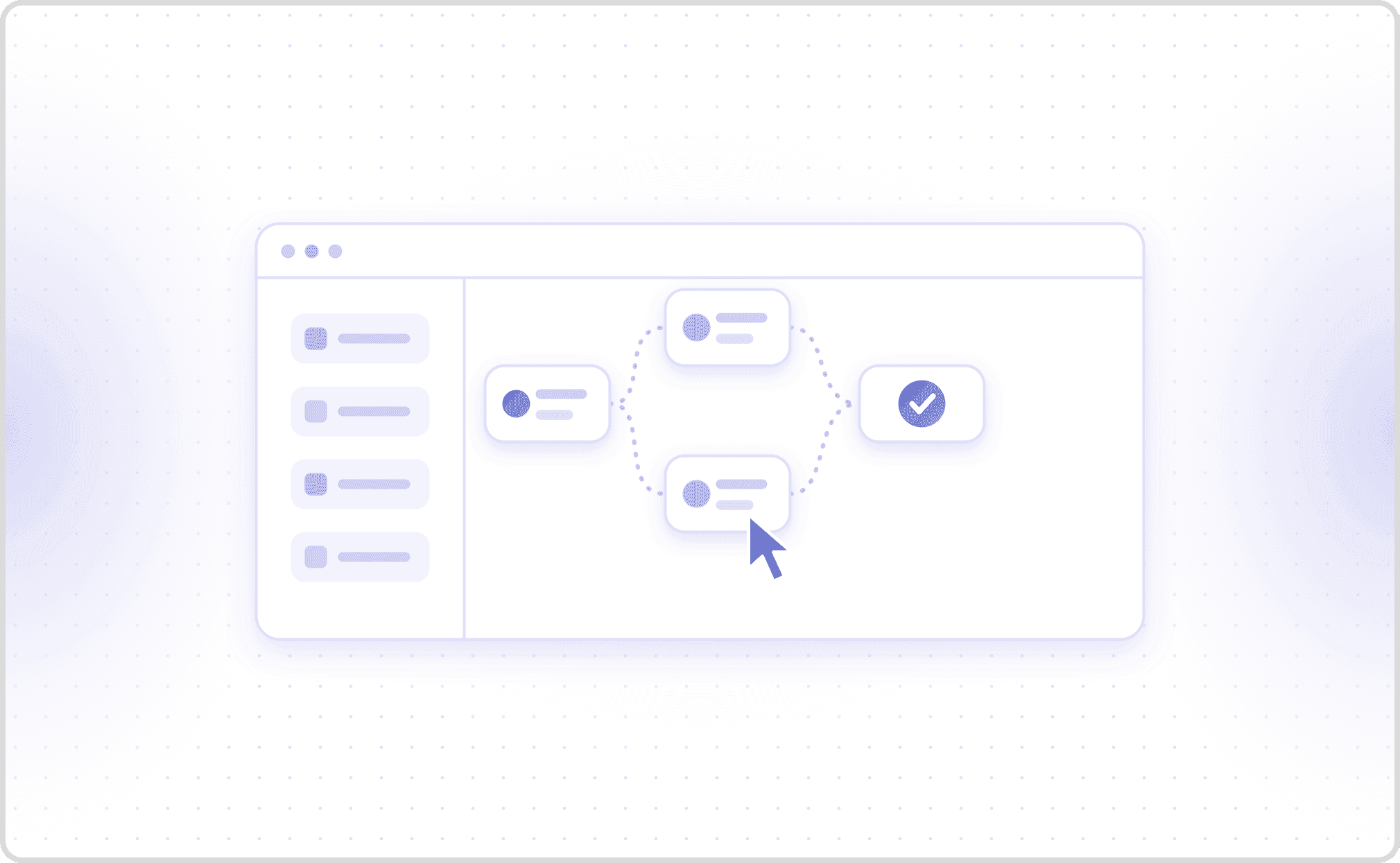
Many Pipecat agents are connected to real business workflows. They schedule appointments, update CRMs, check eligibility, process orders, verify users, route calls, trigger handoffs, or collect structured information.
That means monitoring has to cover backend execution, not just conversation text.
For Pipecat agents, this includes tool-call success, function-call requests and responses, backend execution results, entity extraction, metadata passed through the session, workflow-specific pass/fail checks, and expected outcome failures.
Cekura supports tool-call evaluation by analyzing transcripts together with tool-call results. Teams can also write custom metrics over metadata dictionaries, which is useful for custom Pipecat frameworks where extracted fields, agent state, or backend decisions are passed into the monitoring layer.
Conversation quality and instruction-following monitoring
A Pipecat monitoring tool also needs to evaluate whether the agent behaved correctly.
That includes instruction following, workflow adherence, hallucination, response relevance, response consistency, CSAT, sentiment, drop-off points, early termination, and repetition.
Cekura supports predefined metrics, instruction-following checks, and custom metrics. Its instruction-following metric can identify deviations from the agent’s prompt, SOP, or workflow instructions, while custom metrics let teams define success criteria for specific Pipecat production flows.
This matters because many production failures are behavioral. The agent may skip a required step, fail to confirm the right information, give an unsupported answer, or handle a user change in intent incorrectly.
Alerts, dashboards, and issue frequency
Monitoring should not only surface individual failed calls. It should show production patterns.
Pipecat teams need to know which issues are happening, how often they happen, which issues are severe, what percentage of calls are affected, whether a metric shifted from baseline, and which calls need review first.
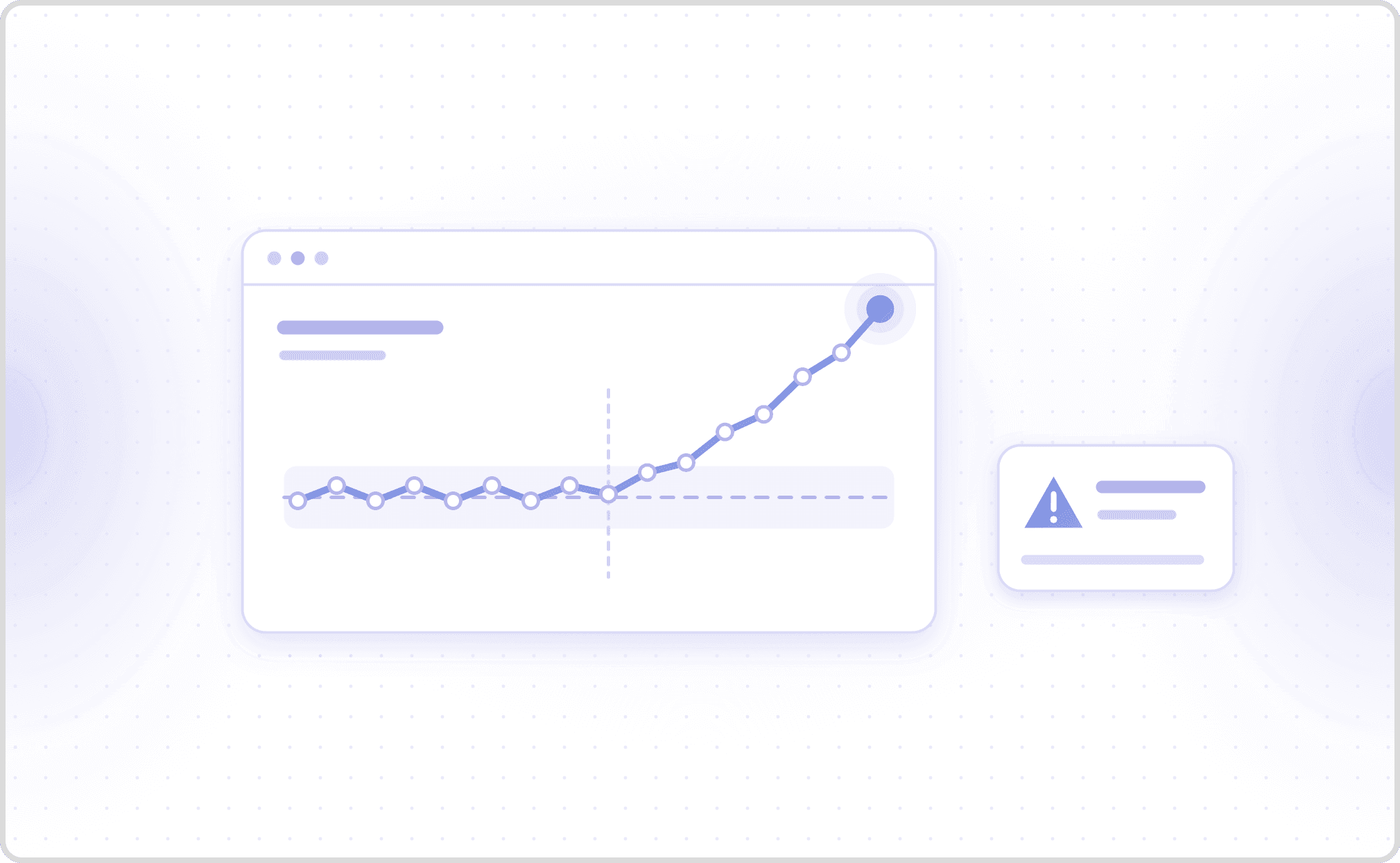
Cekura supports custom dashboards, Slack and email alerts, trend-based alerts, and an alerting engine that can notify teams when metrics shift 2σ from historical norms. It also supports issue severity, issue frequency, occurrence counts, and affected-call percentage views.
How Cekura monitors Pipecat voice agents
Pipecat integration for WebRTC testing and production transcript monitoring
Cekura supports both testing and production monitoring workflows for Pipecat agents.
For testing, Cekura can join Pipecat sessions through WebRTC and run automated simulations against the agent. For production monitoring, teams can send Pipecat-format transcripts to Cekura for monitoring and analysis. The Pipecat SDK can associate OpenTelemetry traces with transcripts, tool calls, recordings, and metadata across simulation runs and production conversations.
This gives Pipecat teams a way to connect trace-level context with the actual user-facing conversation.
Built-in voice and conversation metrics
Cekura includes built-in metrics for voice-agent monitoring across speech quality, conversation flow, AI accuracy, and customer experience.
These include latency, interruption handling, interruption overrun, silence failures, talk ratio, WPM, voice tone and clarity, voice quality, instruction follow, relevancy, response consistency, hallucination, tool-call success, CSAT, and sentiment.
For Pipecat agents, these metrics help monitor both technical performance and conversation behavior. That is the difference between knowing the agent responded and knowing whether the call worked.
Custom metrics for Pipecat workflows and backend logic
Not every production failure can be captured by a predefined metric.
A healthcare Pipecat agent may need to verify identity in a specific order. A sales agent may need to qualify the caller before booking. A support agent may need to call the right backend tool and confirm the result. A custom Pipecat orchestration framework may need to pass state, extracted entities, or workflow decisions into the monitoring layer.
Cekura supports Boolean, rating, numeric, enum, LLM-as-judge, and Python code metrics. Custom Python metrics can run over transcripts, structured transcript JSON, metadata, dynamic variables, call duration, tags, call-ended reason, and other metric results.
That makes Cekura adaptable to Pipecat teams with custom workflows, custom models, or custom orchestration logic.
Slack alerts, issue severity, and production analytics
Cekura can send alerts when production issues appear and organize them by severity and frequency. This is useful for teams monitoring high-volume Pipecat agents. Instead of listening to every call, teams can focus on repeated issues, severe failures, or meaningful metric shifts.
For example, a team could monitor whether latency is trending upward, whether interruption failures are increasing, whether the agent is failing a required workflow step, or whether a new issue is affecting a meaningful share of production calls.
Key monitoring signals for Pipecat agents
Latency and timing signals
Latency is one of the most important signals for Pipecat agent performance monitoring. A Pipecat monitoring tool should capture:
- Average latency
- P50 latency
- P90 latency
- Time to first audio
- Interruption latency
- Interruption overrun
- Turn timing
- Tool-call timing
- Provider delay
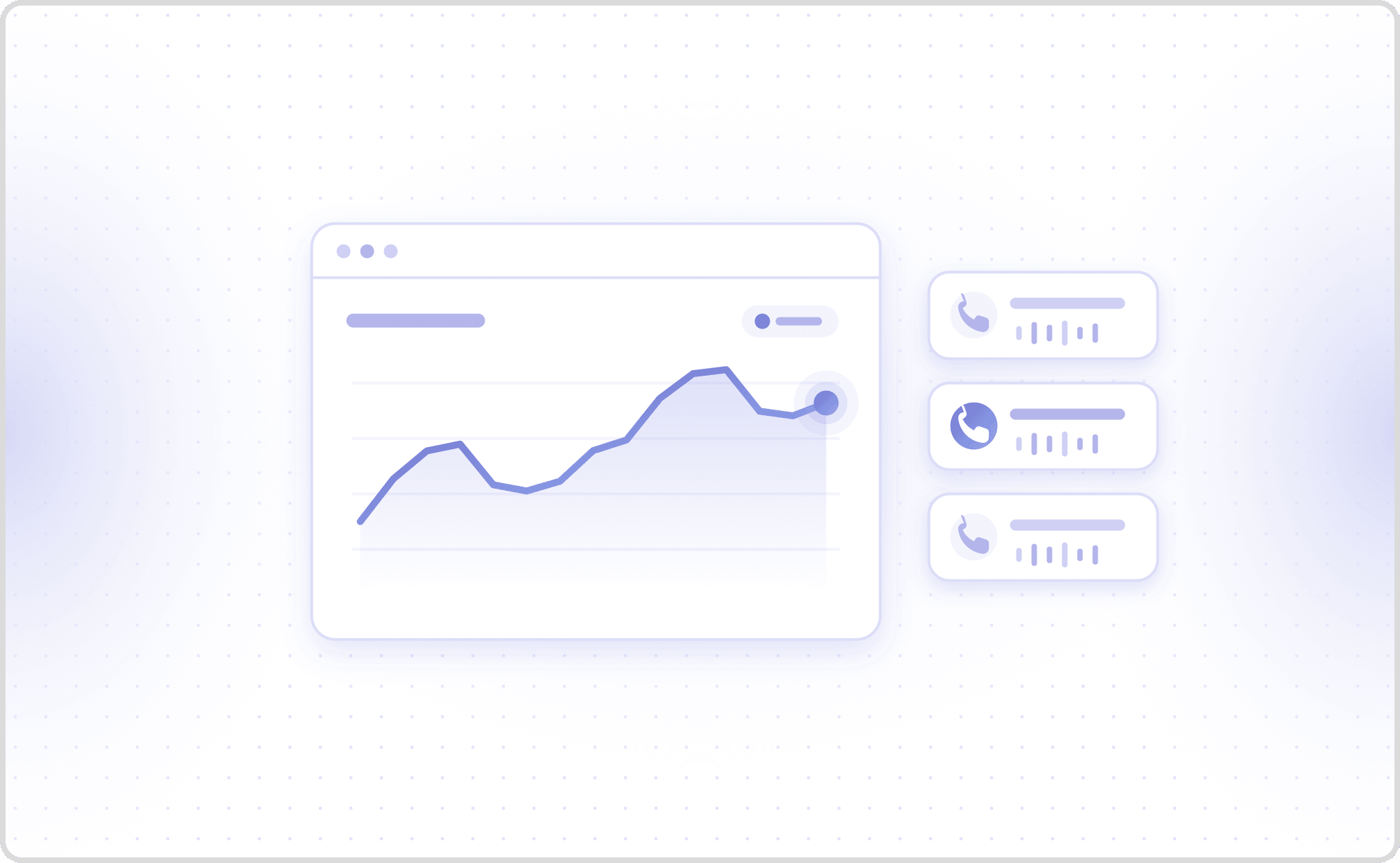
Cekura supports mean, P50, and P90 latency and can monitor interruption overrun and conversation timing behavior across Pipecat sessions.
Audio and speech quality signals
A Pipecat monitoring tool should track:
- Voice clarity
- Voice quality
- Pitch
- WPM
- Pronunciation
- Signal-to-noise ratio
- Unclear or broken speech
- Tone
Cekura’s voice metrics cover WPM, talk ratio, average pitch, voice tone and clarity, pronunciation checks, and overall voice quality.
Conversation-flow signals
Pipecat voice agents need to handle real conversation dynamics. Users interrupt, pause, give short answers, change direction, go silent, or speak over the agent. A Pipecat monitoring tool should track:
- AI interrupting the user
- User interrupting the AI
- Barge-in handling
- Silence failures
- Early termination
- Unnecessary repetition
- Talk ratio
- Pause-heavy calls
Agent correctness signals
Correctness monitoring checks whether the Pipecat agent did the right thing. A Pipecat monitoring tool should track:
- Instruction following
- Expected outcome completion
- Workflow adherence
- Hallucination
- Response relevance
- Response consistency
- Tool-call success
- Backend verification
Cekura can evaluate instruction following, hallucination, relevancy, response consistency, and tool-call success. It can also compare agent behavior against the prompt, SOP, uploaded knowledge base, metadata, or custom metric logic.
Customer-experience signals
Production monitoring should also capture whether the caller experience is degrading. A Pipecat monitoring platform should track:
- CSAT
- Sentiment
- Drop-off points
- Early call termination
- Caller frustration
- Long silences
- Poor pacing
- Agent over-talking
Cekura includes CSAT and sentiment metrics, along with conversation-flow metrics that help detect caller experience issues such as silence, interruption problems, repetition, and termination failures.
Monitoring Pipecat voice agents across testing and production
Pipecat monitoring works best when production issues feed back into testing. A monitoring platform should help teams detect issues in live calls, understand how often they happen, create or update metrics for those issues, re-evaluate previous calls, replay or simulate production failures, run regression tests after fixes, and compare new prompts, models, or infrastructure versions.
Cekura supports this loop. Teams can monitor production calls, add new metrics, re-evaluate historical calls, and simulate production calls to verify that fixes work. Cekura can also run the same scenarios against different models, prompts, or infrastructure versions for A/B testing and regression testing.
This matters for Pipecat teams because production failures are often discovered after the agent is already handling real users. Once an issue appears, the team needs a way to turn that issue into a repeatable test so it does not return in the next deployment.
Monitoring Pipecat agents at scale
A single Pipecat call can be inspected manually. A production Pipecat deployment cannot. At scale, monitoring needs to answer questions like:
- What are the top recurring issues this week?
- Which issues affect the largest share of calls?
- Which workflows are failing most often?
- Which failures are severe enough to alert on?
- Did latency regress after a deployment?
- Are infrastructure issues increasing under load?
- Do new model or prompt changes break existing flows?
Cekura supports production analytics, issue frequency, severity, affected-call share, dashboards, and alerts. It also supports load and infrastructure testing for voice agents, including concurrent simulated sessions, degraded provider conditions, jitter, delayed responses, timeouts, and transport degradation. The capability map notes that Cekura supports high-scale performance testing north of 2,000 concurrent calls.
For teams running enterprise Pipecat monitoring, this creates a practical review workflow: surface repeated failures, prioritize by severity and volume, fix the issue, then replay or simulate the failure before shipping the next change.
When to use Cekura for Pipecat voice agent monitoring
Cekura fits teams that are running or preparing to run Pipecat voice agents in production and need to monitor more than uptime.
It is especially relevant when teams need to monitor real Pipecat conversations, analyze production transcripts and recordings, track latency and interruption behavior, evaluate instruction following, verify workflow completion, monitor tool-call success, use custom metrics, alert on issue frequency, replay production issues as simulations, run regression tests after prompt or model changes, test load conditions, and support compliance workflows such as redaction, audit trails, RBAC, SOC 2, HIPAA, GDPR, or VPC deployment.
For teams that already use OpenTelemetry or infrastructure monitoring, Cekura adds the conversation-level QA layer. It helps connect technical traces to the caller experience and the agent’s actual behavior.
How to get started monitoring Pipecat voice agents with Cekura
A typical Pipecat monitoring workflow in Cekura looks like this:
-
- Connect Pipecat session data, transcripts, recordings, metadata, tool calls, and traces to Cekura.
-
- Configure built-in metrics for latency, interruptions, silence, talk ratio, WPM, instruction following, hallucination, tool-call success, CSAT, and sentiment.
-
- Add custom metrics for workflow-specific requirements, backend logic, or metadata-based checks.
-
- Set alerts for high-severity issues, repeated failures, latency regressions, and metric shifts.
-
- Review production dashboards to identify patterns across calls.
-
- Re-evaluate historical calls when new metrics are added.
-
- Turn production failures into simulations and regression tests.
-
- Run the same scenarios across new prompts, models, or infrastructure versions before release.
This gives Pipecat teams one workflow for production monitoring, issue detection, simulation, and regression testing.