No-code voice agent testing tools let a QA or product team test a voice agent from a dashboard instead of a test harness. Cekura is one: Cekura imports the agent from its voice platform, generates test scenarios from the agent's prompt, places simulated calls, and scores each transcript against pass criteria written in plain English.
TL;DR
-
A no-code voice agent testing tool covers four jobs without code: connecting the agent, writing test scenarios, scoring calls, and scheduling reruns. Continuous integration is the one step that still needs a config file.
-
Cekura imports agents directly from VAPI, Retell, ElevenLabs, Synthflow and Bland AI, and generates evaluators from the agent description, which most customers fill with the agent's main prompt.
-
Plain-English scoring is not automatically trustworthy. A 2026 study of 242 voice-agent conversations found LLM judges' reliability is "metric- and configuration-dependent rather than uniform".
-
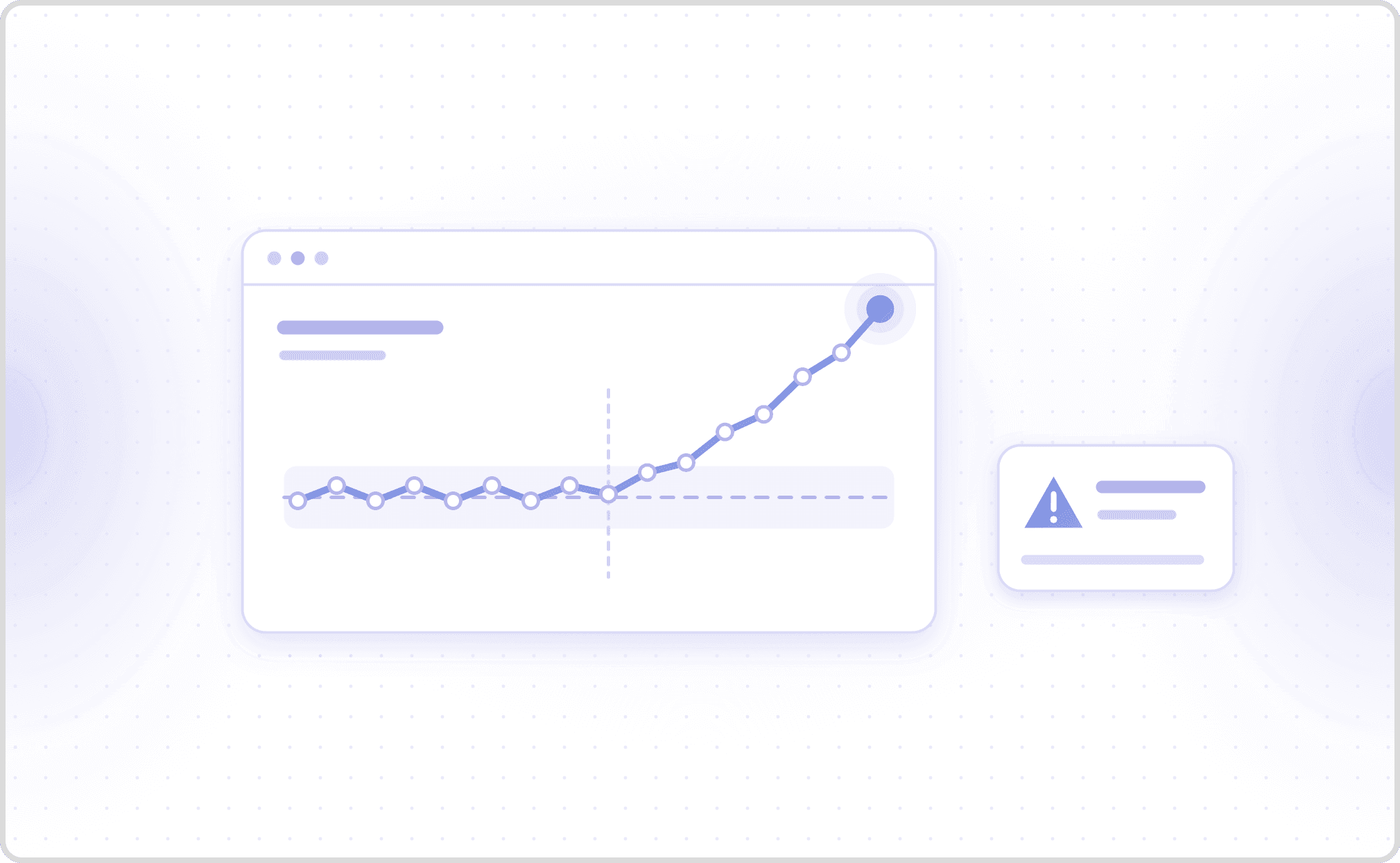
One passing call proves little. On Cekura's agent workflow benchmark, the top configuration passed all three retained runs on 62 of 82 scenarios.
-
Cekura's Pay as you go plan charges $0.25 per voice testing minute and $0.05 per monitored call, with the first seat free and $30 per month for each additional seat.
What is a no-code voice agent testing tool?
A no-code voice agent testing tool is a platform that tests a voice agent end to end through a web interface: it places simulated calls, records the transcript, and returns a pass or fail verdict, with no test code written by the team. The category exists because the people who know what a good call sounds like, support leads, QA analysts and product managers, are rarely the people who maintain a test harness.
No-code covers four jobs. Connecting the agent means entering platform credentials rather than writing a client. Authoring tests means describing a caller's goal in a sentence. Scoring means stating the pass condition in plain English. Scheduling means picking a time, not editing a cron file.
Cekura handles all four from its dashboard, and Cekura also places the calls itself: an agent built on Cekura needs no external API keys or assistant IDs to be tested. The honest limit is continuous integration. Cekura's GitHub Action takes an agent ID and scenario IDs or tags in a workflow file, so a pipeline gate is a small config job even when every test was built without code.
How should you evaluate no-code voice agent testing tools?
Evaluate no-code voice agent testing tools on who writes the tests, whether real voice calls are placed, how pass or fail is decided, and what the meter charges for. Those four criteria separate a tool a QA team can own from one that hands every change back to engineering.
| Approach | Who writes the tests | Real voice calls | How pass or fail is decided | What you pay for |
|---|---|---|---|---|
| Cekura | QA or product, in the dashboard; engineers through the SDK, CLI or API | Yes, over the agent's own platform, telephony or SIP | Expected outcome per scenario plus plain-English LLM Judge metrics; Python metrics for teams that want code | $0.25 per voice testing minute on Pay as you go; first seat free, then $30 per month per seat |
| Code-first testing SDK or framework | Engineers, in code | Depends on the framework; some test conversation logic in text mode only | Assertions written in code | Engineering time, plus any hosted runner |
| Scripted IVR call-flow tester | Whoever maintains the scripts | Yes, against fixed prompts | Exact match on expected prompts and keypresses | Licence plus script maintenance |
| Built in-house | Your engineers | Only if you build the telephony layer | Whatever you write and maintain | Salaries and on-call time |
Setup time is the criterion buyers underestimate: Cekura's provider import pulls the agent's prompt, tools, dynamic variables and knowledge base from five platforms in one step, to the extent each provider exposes them. Coverage is the criterion buyers misjudge, because a suite that runs every scenario once cannot separate a flaky agent from a broken one. For automated voice agent functional testing and performance monitoring alike, ask whether the tool reruns scenarios and whether it scores production calls, not only test calls. What engineering teams actually use alongside a dashboard is a code path over the same suite, so pick a tool whose dashboard-built scenarios also run through an API, and QA and engineering share one suite.
How does Cekura run voice agent tests without code?
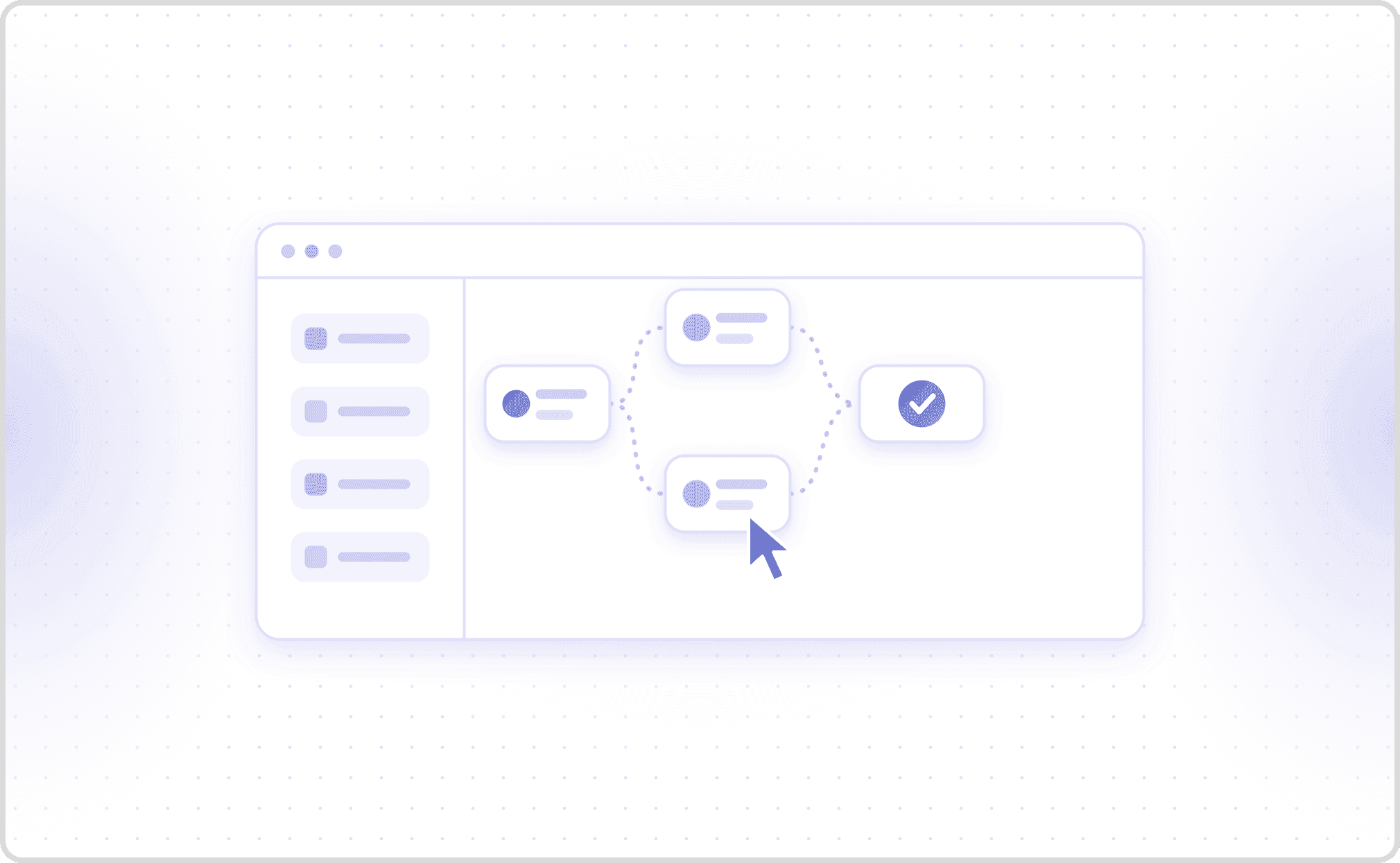
Cekura runs voice agent tests without code through four dashboard steps: connect the agent, generate evaluators, attach metrics, and run or schedule them. Cekura's agent setup guide documents a direct import for VAPI, Retell, ElevenLabs, Synthflow and Bland AI that brings across the agent's name, prompt, language, call settings, phone number, tools, dynamic variables and knowledge base. LiveKit and Pipecat agents connect through credentials entered in agent settings, and tests then run from the frontend.
Cekura generates evaluators from the agent description, and Cekura's automated test case generation pairs each one with an expected outcome. Each evaluator combines instructions, an expected outcome, metrics, a personality and an optional test profile. The personality sets who is calling: language, voice and accent, speaking speed, interruption timing, background noise and network conditions. Upload a knowledge base as a .txt, .pdf, .csv or .json file and Cekura generates question scenarios whose expected outcomes come from the document.
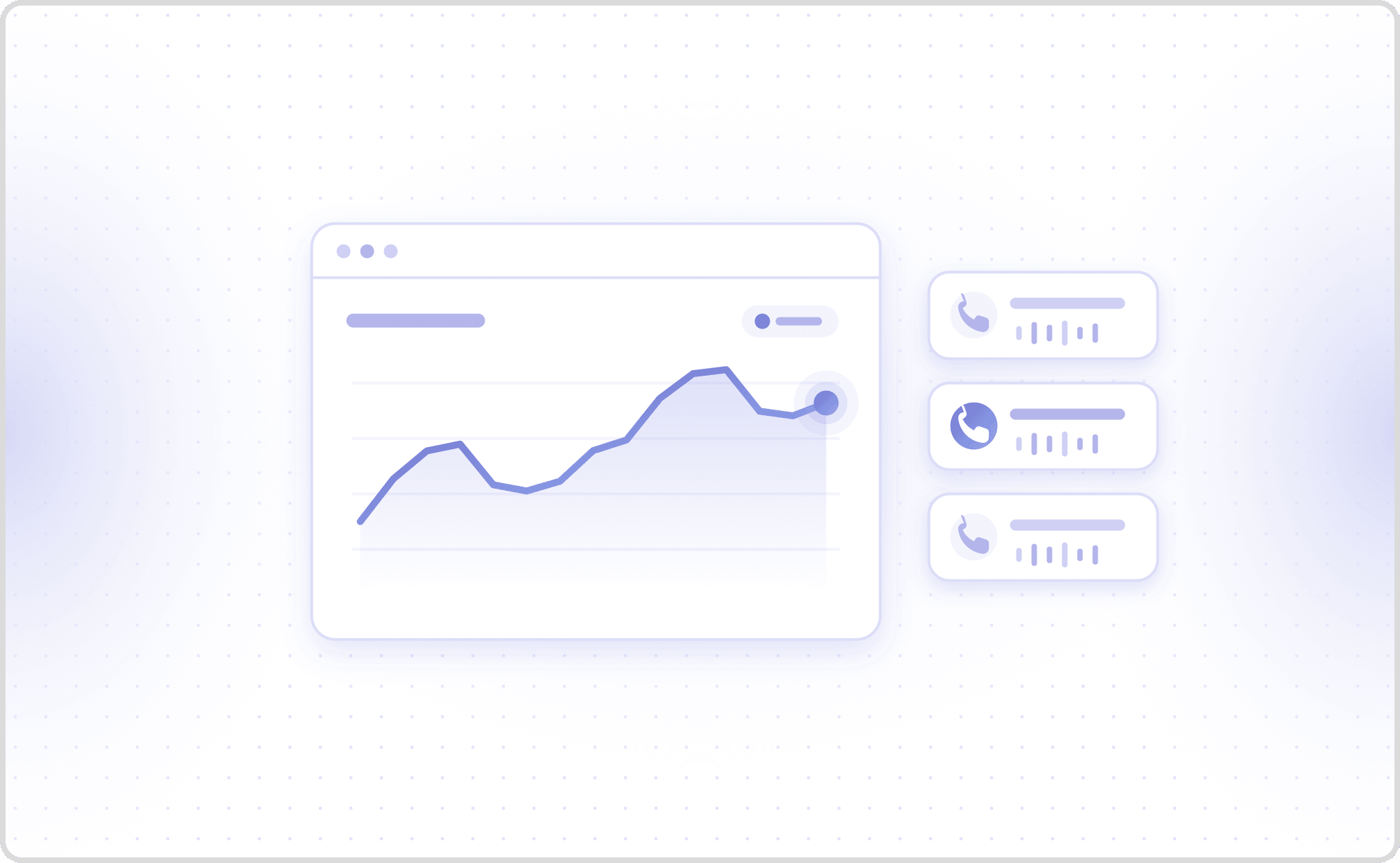
Cekura schedules any selected evaluators as a cron job from the Evaluators page, using a predefined schedule or a custom one. For performance monitoring, Cekura can also pull completed VAPI, Retell, ElevenLabs and Bland calls every 30 seconds and score production traffic with the same metrics.
Can plain-English pass criteria be trusted?
Plain-English pass criteria are trustworthy on some metrics and unreliable on others, so know which before letting them gate a release. Cekura's LLM Judge metrics let a team describe success in plain English, and the judge reads the transcript by default.
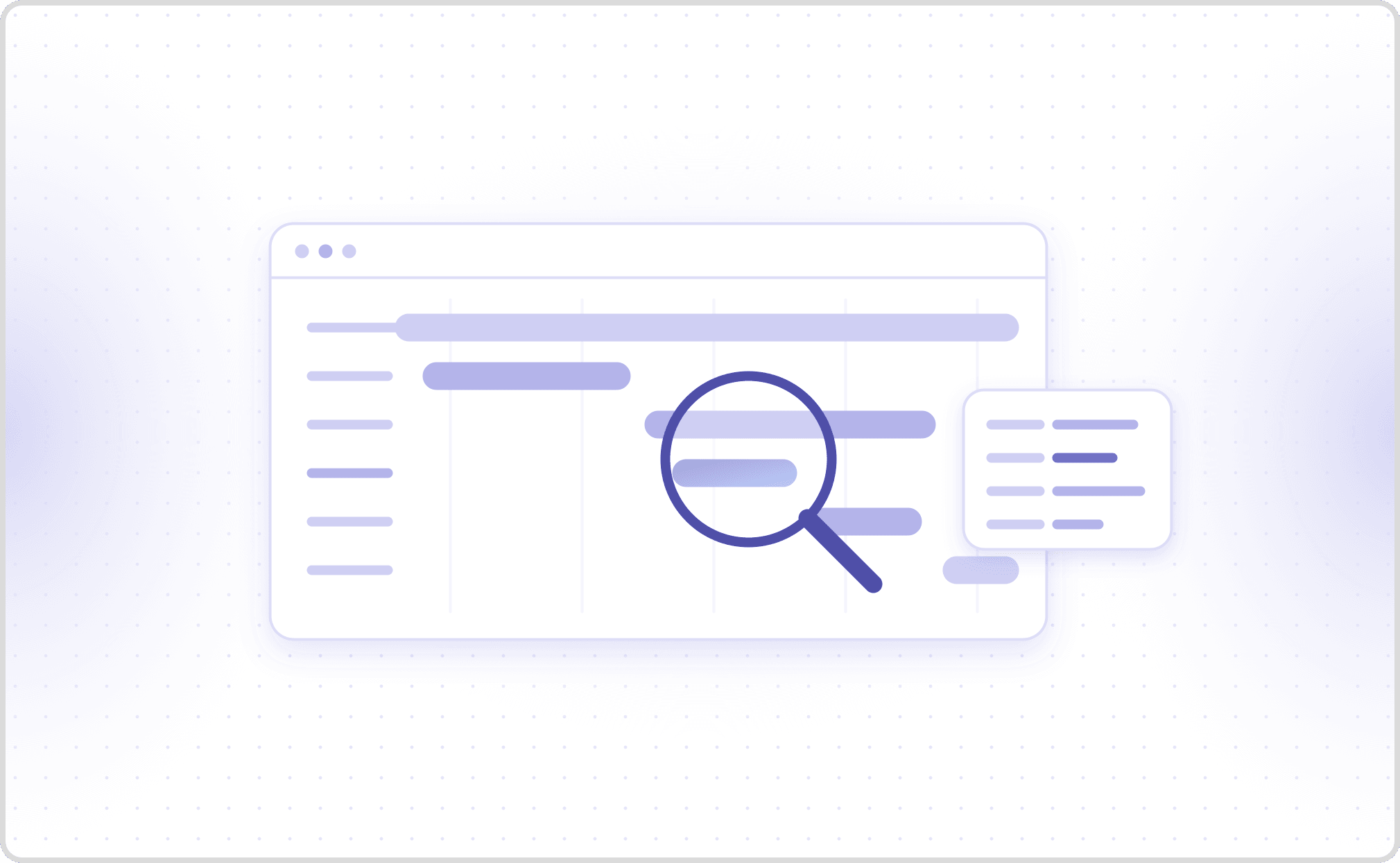
Shashank Singh, Anupam Purwar and Kritika Srivastava of Sprinklr AI compared three trained human annotators with GPT-4.1 and GPT-5 judges across 242 retail and telecom voice-agent conversations and concluded that LLM judging's "reliability is metric- and configuration-dependent rather than uniform". On telecom calls, the ratio of human to judge scores on the two safety metrics exceeded 3 in every configuration, and in both domains the judges scored goal achievement after a speech recognition error more generously than humans did.
Cekura's answer is calibration rather than trust. Cekura's auto-improving metrics take 10 to 20 calls a user marks as agree or disagree, and across Cekura's own migrated regression sets reached 95 to 100% agreement with human labels on most metrics within 4 to 6 iterations. Repeat runs matter too: across 12 voice systems, ServiceNow's EVA-Bench measured a median 0.44 gap on its accuracy axis between passing at least once in 5 trials and passing all 5.
Should you build voice agent testing in-house or buy a no-code platform?
Building voice agent testing in-house is a real option, and it costs more than the first prototype suggests. You maintain a simulated caller, a scorer, and a telephony layer that has to keep working when a voice platform changes its API. Every new scenario then becomes an engineering ticket, which is the bottleneck a no-code tool exists to remove. Teams that build in-house usually keep turn-level unit tests in code and still lack full-call coverage.
Buying moves the cost to a meter. Cekura's pricing page lists Pay as you go at $0.25 per voice testing minute, $0.05 per monitored call and $0.025 per chat reply, with 10 concurrent calls and 300 free credits to start, about 60 minutes. The $500 per month Startup plan includes about 2,000 voice testing minutes, 10 seats and 50 concurrent calls.
Reruns are the hidden line item in either budget. On Cekura's agent workflow benchmark, a frozen study of 8 configurations, 82 scenarios and 3 retained repeats in which providers chose their own models and speech components, the top configuration passed all three runs on 62 of 82 scenarios. Budget for three runs per scenario, not one.
Frequently asked questions
Which platform should I use for no-code voice agent testing?
Use a platform that places real voice calls, lets a non-engineer write the scenario and the pass condition, and reruns each scenario more than once. Cekura meets all three: Cekura imports the agent from its voice platform, generates evaluators from the agent's prompt, scores calls with plain-English metrics, and schedules reruns from the dashboard. Engineering teams that later want code get Cekura's SDK, CLI and API over the same suites.
How much do no-code voice agent testing tools cost?
Pricing models differ, so compare the meter, not the headline. Cekura bills $0.25 per voice testing minute and $0.05 per monitored call on Pay as you go, with the first seat free and $30 per month per additional seat. The Startup plan is $500 per month for about 2,000 testing minutes and 10 seats. Budget three runs per scenario, because a single passing call does not show a scenario is reliable.
Can no-code voice agent tests run in CI?
Yes, with one small config step. Cekura's GitHub Action runs dashboard-built scenarios by scenario ID or tag on push, on pull request or on a schedule, and reports pass or fail back to the check; Cekura's CI/CD testing guide shows the setup. The workflow file takes an agent ID and an API key. Teams that want tests themselves in code use Cekura's SDK for automating voice agent tests.
Does Cekura handle no-code voice agent testing?
Yes. Cekura runs the full test loop from its dashboard: provider import for VAPI, Retell, ElevenLabs, Synthflow and Bland AI, evaluators generated from the agent description or a knowledge base file, personalities that set accent, pace, interruptions and background noise, LLM Judge metrics written in plain English, and cron schedules. Cekura also scores imported production calls with the same metrics, so test and live traffic share one definition of pass.
Do no-code testing tools meet enterprise compliance and audit requirements?
Check the plan, not the product page headline. Cekura's Enterprise plan adds SAML SSO, SCIM, audit logs, an IP allowlist, data residency and VPC or on-premise deployment, with a custom BAA and DPA; the Startup plan includes a signed BAA and DPA. Cekura states it is SOC 2, HIPAA and GDPR compliant. Confirm which controls your auditor needs before choosing a tier.