
A voice AI agent can sound flawless and still corrupt your system of record. The failures show up in what it writes back to your CRM mid-call, when a caller talks over the agent or gives a date out of order.
I evaluated the top conversational AI platforms with voice CRM on how deeply each product couples to your CRM.
7 Top Conversational AI Platforms with Voice CRM: TL;DR
- Salesforce Agentforce: Best for orgs already standardized on Salesforce that want voice actions on live records.
- Retell AI: Best for engineering orgs building custom mid-call CRM write-back.
- Talkdesk: Best for healthcare and enterprise contact centers that need EHR plus CRM.
- Cognigy: Best for global enterprises running voice and digital across a CCaaS stack.
- Vapi: Best for maximum stack flexibility with a bring-your-own CRM via function calls.
- Sierra: Best for enterprise multichannel agents that take CRM actions mid-conversation.
- Hyro: Best for health systems that need deep EHR integration over a knowledge graph.
How I Researched and Tested These Voice CRM Platforms
The conversational AI market reached $17.97 billion in 2026 and is on track for $82.46 billion by 2034, per Fortune Business Insights. Grand View Research puts the same market at $49.39 billion by 2030 at a 23.7% CAGR.
Voice is the fastest-moving slice, and healthcare is its quickest-growing end use at a 42% CAGR through 2033. That growth is why the CRM write path deserves more scrutiny than the demo voice.
I scored each platform on the factors that decide whether a call actually updates your records correctly.
- CRM coupling depth: whether the agent reads live records mid-call, writes during the call, or only syncs after hangup.
- Data integrity: duplicate records, silent write failures, and field mapping under messy real calls.
- Compliance: HIPAA and BAA coverage, PHI redaction, and audit trails, weighted heavily for healthcare.
- Deployment model: how much engineering the platform assumes before a working call flow exists.
- Pricing transparency: the all-in cost once telephony, models, and connectors stack on top.
I discovered a clear split. Some platforms treat the CRM as the brain, while others treat it as an API call you configure yourself. That difference decides how much cleanup lands on your staff after every campaign.
Top Voice CRM Platforms: Quick Comparison
| Platform | CRM Coupling | Live Write-Back | Best For | HIPAA |
|---|---|---|---|---|
| Salesforce Agentforce | Read and write, native Salesforce | ✅ | Salesforce-native orgs | ✅ BAA |
| Retell AI | Read and write via function calls | ✅ | Custom developer builds | ✅ Enterprise BAA |
| Talkdesk | Read and write, EHR plus CRM | ✅ | Healthcare, enterprise CCaaS | ✅ BAA |
| Cognigy | Read and write via CRM and CCaaS | ✅ | Global multichannel ops | ✅ |
| Vapi | Read and write via function calls | ✅ | Bring-your-own CRM | ⚠️ Paid add-on |
| Sierra | Read and write via journeys | ✅ | Enterprise multichannel | ✅ |
| Hyro | Read and write, EHR plus Salesforce | ✅ | Health systems on Epic | ✅ BAA |
The 7 Top Conversational AI Platforms with Voice CRM in 2026
Each platform below sits at a different point on the CRM coupling scale. Read the "Best for" line first, then match it to your stack.
1. Salesforce Agentforce: Best for Salesforce-Native Orgs
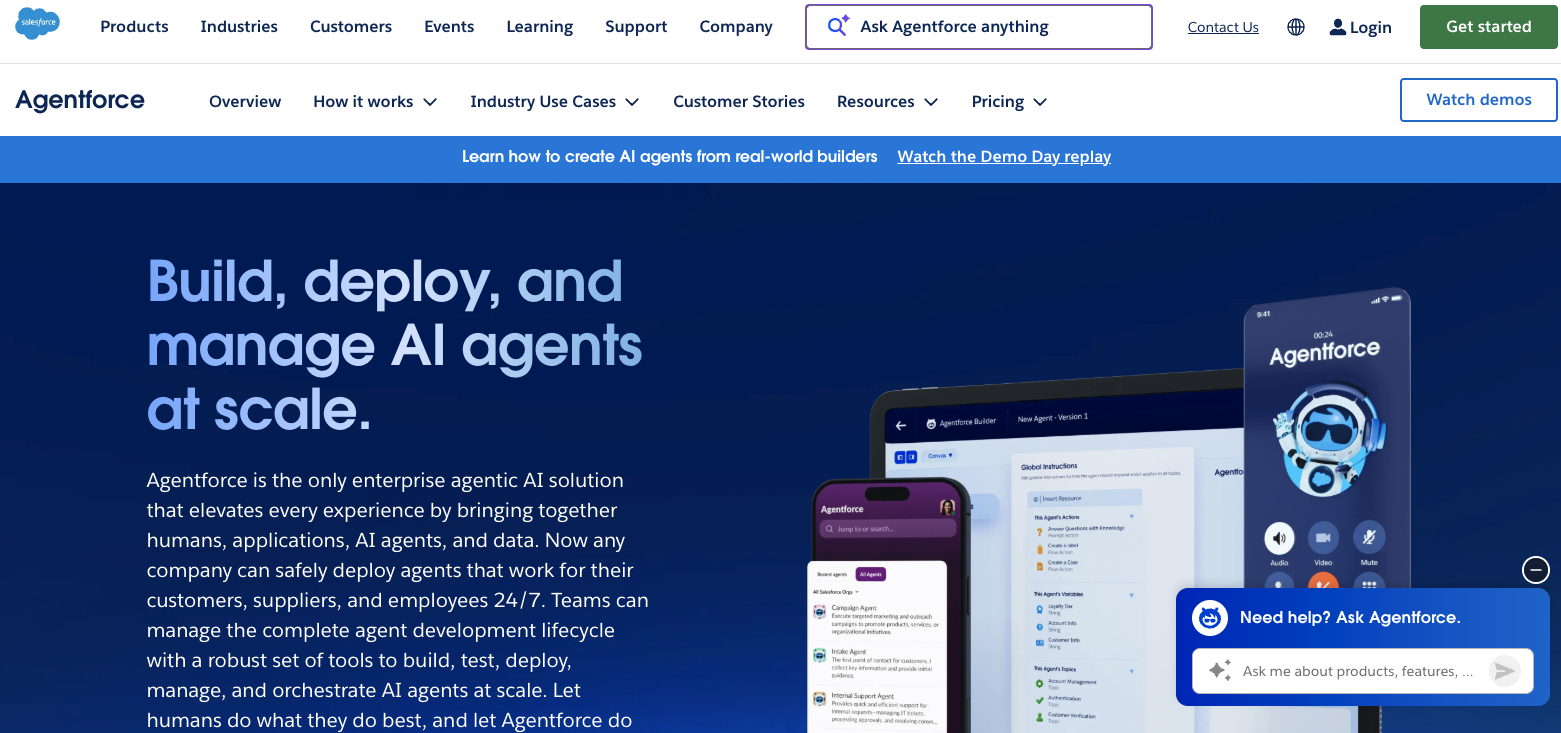
What it does: Agentforce runs autonomous AI agents inside Salesforce, and Agentforce Voice extends them to phone calls that act on live CRM records.
Best for: Orgs where Salesforce is already the system of record and voice is one more channel on top of it.
Agentforce Voice went generally available on October 21, 2025, with native telephony partners that include Amazon Connect, Five9, NiCE, and Vonage.
During a call, an agent can authenticate the caller by email, pull recent orders, and update a case, all against live Salesforce data. That tight coupling is the whole point of picking Agentforce over a standalone voice tool.
Key Features
- Live record actions: the agent reads and updates Salesforce objects during the call, so the record stays current before the caller hangs up.
- Flex Credits metering: each action draws credits, which ties cost to what the agent actually does.
- Digital Wallet tracking: real-time consumption visibility across customer, employee, and voice use cases.
Pros and Cons
Pros:
✅ Deep native Salesforce coupling means no middleware to move call data into the CRM.
✅ Low-code Agent Builder lets admins ship agents without a full engineering project.
✅ Voice, employee, and customer agents share one Flex Credit pool.
Cons:
❌ Agentforce requires an existing Service Cloud foundation, so it adds cost on top of an existing Service Cloud license.
❌ Consumption pricing gets hard to forecast, since one caller request can trigger several billed actions.
What Users Say
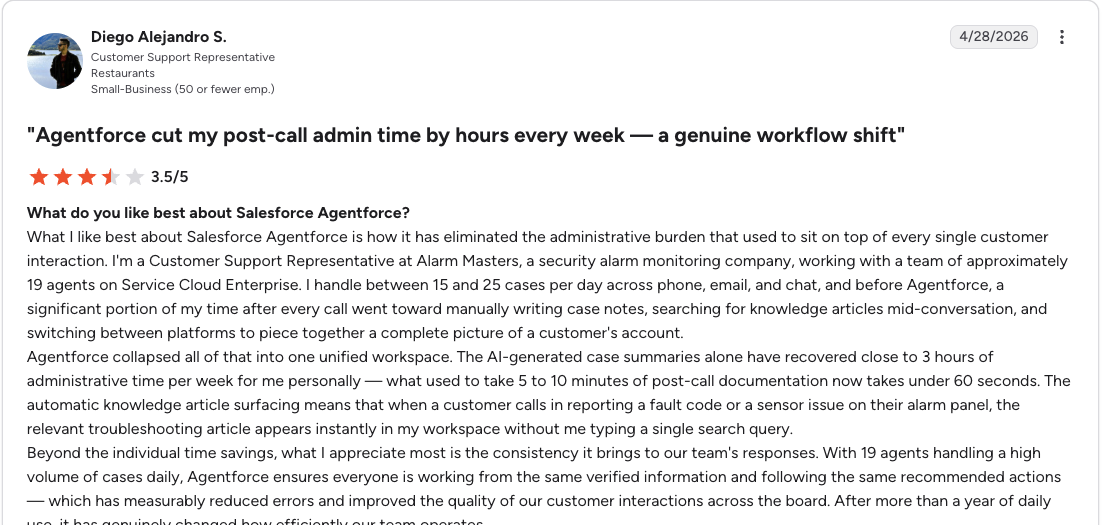
"With 19 agents handling a high volume of cases daily, Agentforce ensures everyone is working from the same verified information." (Diego Alejandro S., G2)
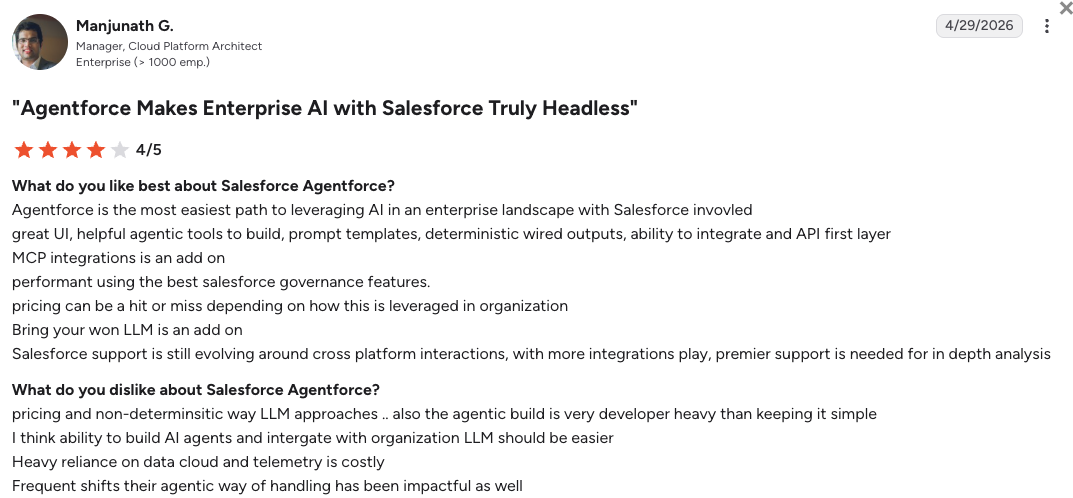
"The agentic build is very developer heavy than keeping it simple I think ability to build AI agents and intergate with organization LLM should be easier" (Manjunath G., G2)
Pricing
Per the official Agentforce pricing page, Salesforce Foundations starts at $0, and Flex Credits then run $500 per 100,000, where a standard action costs 20 credits (about $0.10) and a voice action costs 30 credits (about $0.15).
A separate Conversations model bills a flat $2 per conversation.
Bottom Line
If your data already lives in Salesforce, Agentforce gives you the tightest voice-to-CRM loop on this list. Budget for Service Cloud and Data Cloud underneath it, and model your action volume before signing.
2. Retell AI: Best for Custom Mid-Call Write-Back
What it does: Retell AI is an API-first voice platform where you build agents with live function calling, so the agent can update a CRM record while the call is still active.
Best for: Engineering orgs that want granular control over how voice data flows into Salesforce, HubSpot, or a custom CRM.
Retell has no native CRM of its own. You connect it through function calls, then the agent creates a lead, books an appointment, or updates a contact mid-conversation.
In testing documented across the Cekura voice AI CRM integration guide, a Retell agent updated a HubSpot contact record while the call was still live, rather than batching the write after hangup. This is why developer-heavy orgs choose it over other options.
Key Features
- Live function calling: the agent executes CRM writes during the call, while the caller is still on the line.
- BYO stack: you choose your LLM, voice, and telephony, and swap any layer without rebuilding.
- Simulation testing: built-in checks help you get to production faster.
Pros and Cons
Pros:
✅ No platform fees or feature gating, so every plan gets full access.
✅ Around 600ms latency keeps conversations feeling natural.
✅ SOC 2 certified and HIPAA-ready with BAAs on the Enterprise tier.
Cons:
❌ Non-linear qualification logic and CRM writes need a developer to configure and maintain.
❌ Component billing makes the true per-minute cost hard to forecast at volume.
What Users Say
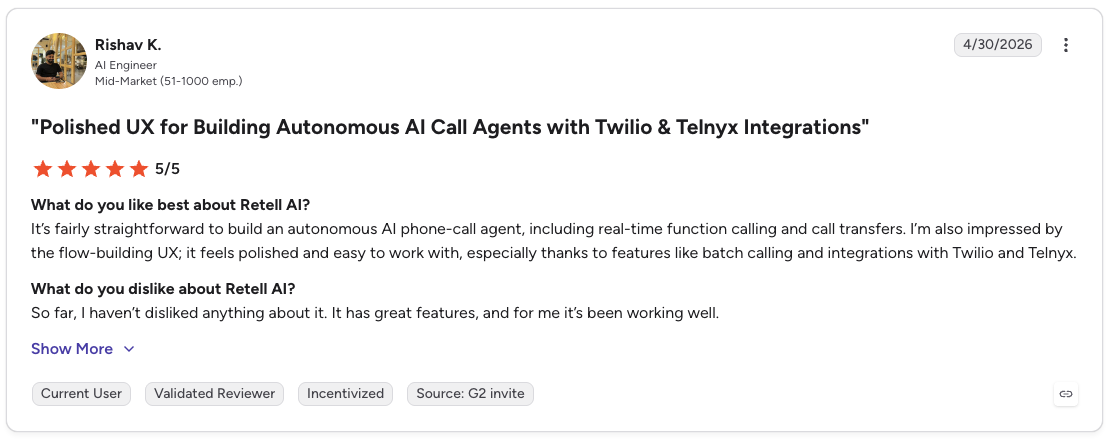
"It’s fairly straightforward to build an autonomous AI phone-call agent" — Rishav K., G2
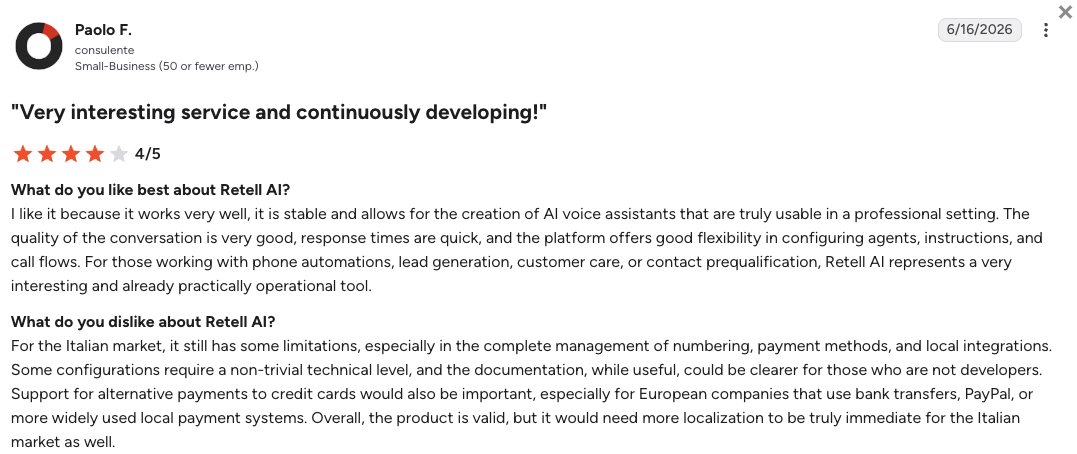
"Some configurations require a non-trivial technical level, and the documentation, while useful, could be clearer" (Paolo F., G2)
Pricing
Per the Retell pricing page, the pay-as-you-go plan starts at $0 with $10 in free credits and 20 free concurrent calls. The voice engine starts at $0.07 per minute, and the real all-in cost lands around $0.11 to $0.31 per minute once you add an LLM and telephony.
The Enterprise tier moves to custom pricing for teams that need dedicated infrastructure, higher concurrency, and a signed BAA. For a deeper look at validating a Retell agent, see the Cekura guide to testing Retell AI voice agents.
Bottom Line
Pick Retell when you have engineering capacity and want to own the voice-to-CRM path down to the function call. If nobody on staff can maintain that integration, a packaged platform will serve you better.
3. Talkdesk: Best for Healthcare and Enterprise Contact Centers
What it does: Talkdesk is an enterprise contact center platform whose Autopilot voice AI reads and updates CRM and EHR records during a call.
Best for: Healthcare providers and large contact centers that need the agent to act inside Epic, Oracle Health, or athenahealth as well as a CRM.
Talkdesk Autopilot for Healthcare stands out because it can read and update information from multiple EHRs during a single conversation, per Talkdesk's own announcement. It handles scheduling, confirmations, refill requests, and MyChart password resets across voice and digital.
According to an Evara Health case study, Autopilot achieved a self-service rate of up to 45% and led to a 90% decrease in wait time.
Key Features
- EHR read and write: connects to Epic, Oracle Health, and athenahealth through FHIR APIs for real-time patient data.
- Patient 360 workspace: shows history, medical details, and future appointments on one screen.
- Autopilot across channels: the same self-service flows run on voice and digital.
Pros and Cons
Pros:
✅ Deep EHR coupling completes tasks patients call about, rather than deflecting them.
✅ Embeds directly into Epic Cheers, so agent and CRM live in one place.
✅ Contact center reliability with HIPAA, HITRUST, and SOC 2 coverage.
Cons:
❌ Enablement requires a Talkdesk engagement, so a scoped rollout replaces any self-serve path.
❌ Bespoke clinical logic still needs professional-services design time.
What Users Say
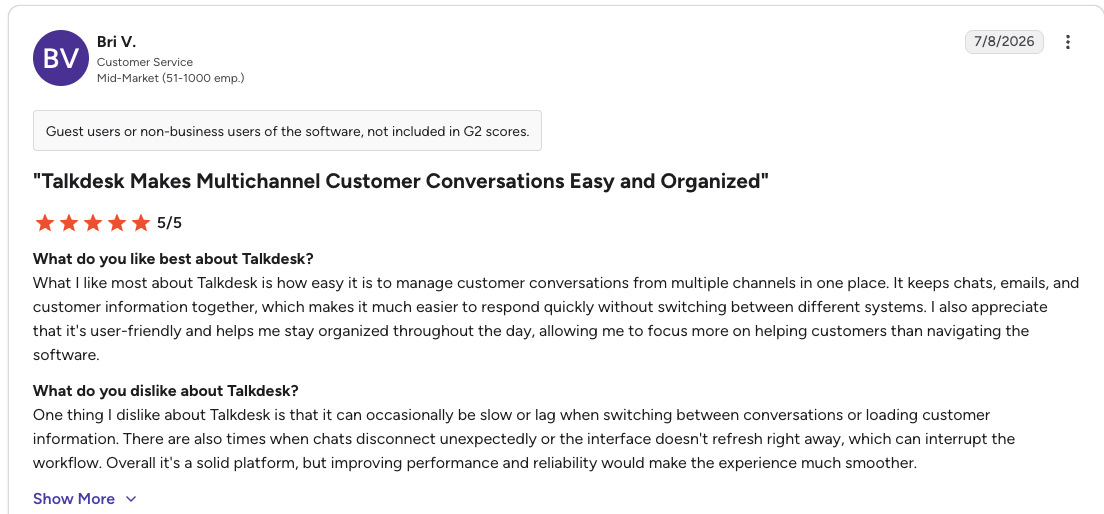
"What I like most about Talkdesk is how easy it is to manage customer conversations from multiple channels in one place." (Bri V., G2)
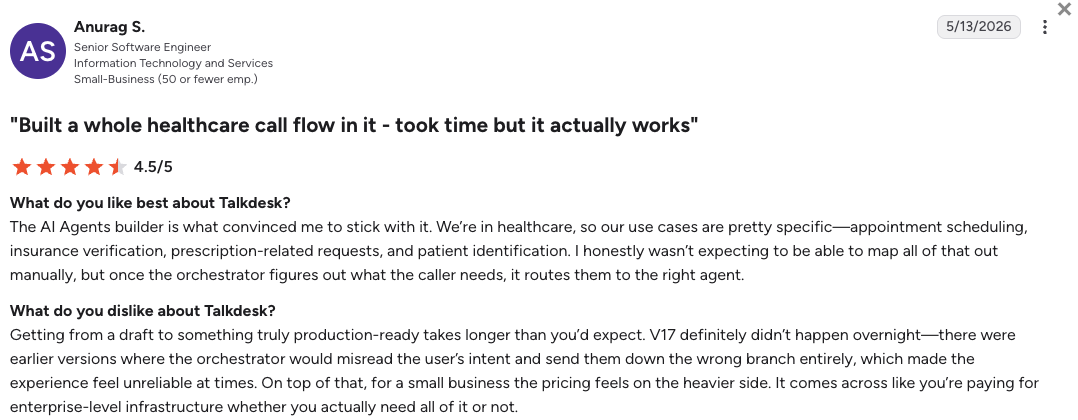
"Getting from a draft to something truly production-ready takes longer than you’d expect." (Anurag S., G2)
Pricing
Talkdesk publishes seat-based CX Cloud plans, and Healthcare Experience Cloud is quote-based because it requires a scoped engagement. Contact Talkdesk for a Healthcare Autopilot quote against your EHR footprint.
Bottom Line
For an Epic-centric health system that wants voice automation acting inside the record, Talkdesk is one of the few options built for it. Plan for a scoped rollout rather than a same-week launch.
4. Cognigy: Best for Global Multichannel Deployments
What it does: Cognigy is an enterprise conversational and agentic AI platform that runs voice and digital agents across contact center operations, with CRM and CCaaS coupling.
Best for: Global enterprises running high volumes across many languages and channels that want CRM actions inside a CCaaS stack.
NiCE closed its acquisition of Cognigy on September 8, 2025, valuing it at nearly $955 million. Cognigy now ships both inside NiCE CXone and standalone. Its agents run in over 100 languages across more than 30 channels, and it serves brands such as DHL, Bosch, and Lufthansa.
Key Features
- Agentic AI agents: agents that reason, adapt, and act across a conversation rather than following a fixed script.
- 30-plus channels: voice, chat, and messaging from one agent definition.
- CCaaS and CRM coupling: native fit with Genesys, Avaya, and Salesforce for mid-call actions.
Pros and Cons
Pros:
✅ Strong multilingual and multichannel coverage for global operations.
✅ Enterprise governance with HIPAA, SOC 2, and GDPR certifications.
✅ Now backed by NiCE's CXone platform and CX data.
Cons:
❌ Depth assumes a mature contact center and IT resources to run it.
❌ Pricing is custom, so budgeting needs a sales conversation.
What Users Say
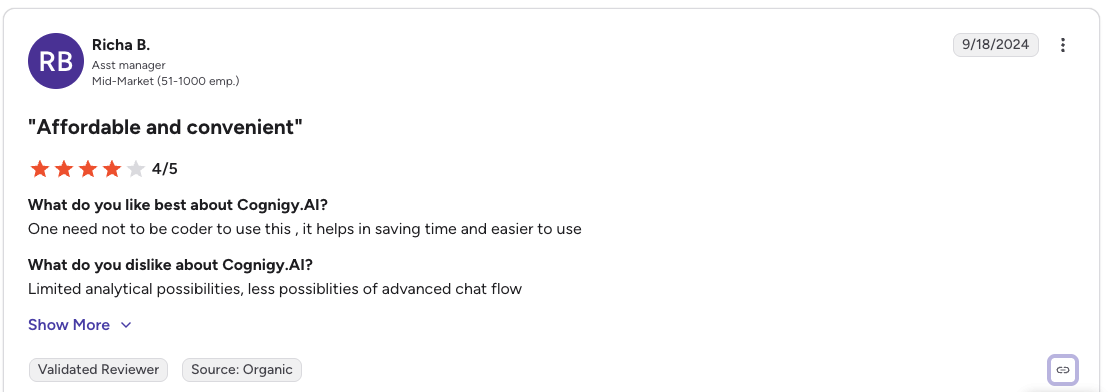
"One need not to be coder to use this; it helps in saving time and easier to use." (Richa B., G2)
"Limited analytical possibilities, less possiblities of advanced chat flow" (Richa B., G2)
Pricing
Cognigy uses custom enterprise pricing. Contact NiCE Cognigy for a quote scoped to your channels and volume.
Bottom Line
Cognigy fits large, multilingual operations that want agentic AI wired into an existing CCaaS and CRM stack. Smaller shops will find the depth more than they need.
5. Vapi: Best for Bring-Your-Own-CRM Flexibility
What it does: Vapi is a developer-first orchestration layer that ties together speech-to-text, an LLM, text-to-speech, and telephony, then exposes tool calls so agents can update a CRM mid-call.
Best for: Developer-led orgs that want full control over every layer and a CRM they wire in through function calls.
Vapi does not lock you into a model or voice vendor. Because it exposes tool calls and custom LLM endpoints, an agent can look up an order, book a slot, or update a CRM during the call. That flexibility is its strength and its cost, since you assemble and maintain the whole stack yourself.
Key Features
- Model-agnostic pipeline: swap STT, LLM, TTS, and telephony providers without redesigning the agent.
- Tool calls: agents take real CRM actions mid-conversation through function calls.
- Bring your own keys: validate provider keys and Vapi stops billing you for that layer.
Pros and Cons
Pros:
✅ Maximum flexibility across every layer of the voice stack.
✅ No mandatory base subscription on pay-as-you-go.
✅ A startup grant offers up to 90,000 free minutes for eligible companies.
Cons:
❌ A real deployment can involve four to six providers and several invoices.
❌ HIPAA compliance is a paid add-on on pay-as-you-go, around $2,000 per month.
What Users Say
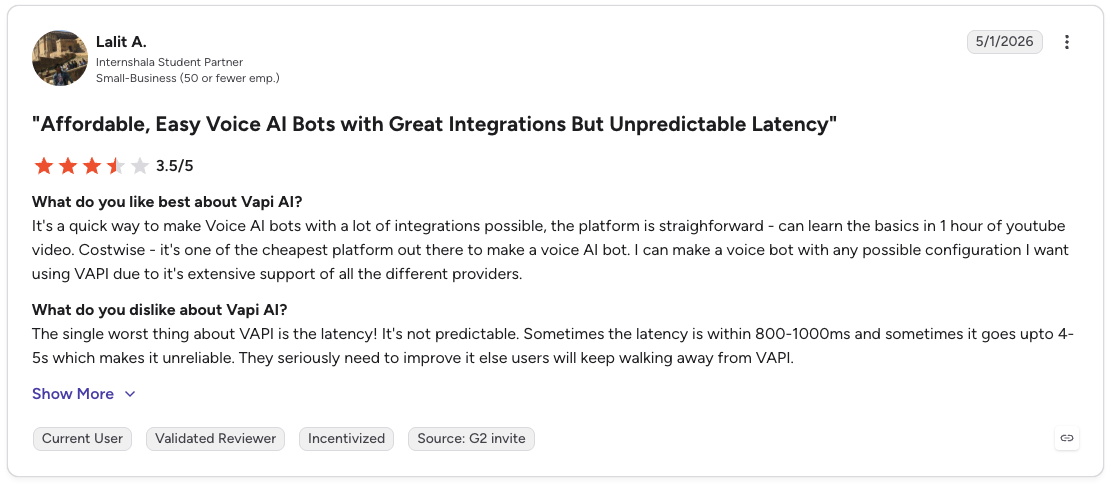
"It's a quick way to make Voice AI bots with a lot of integrations possible" (Lalit A., G2)
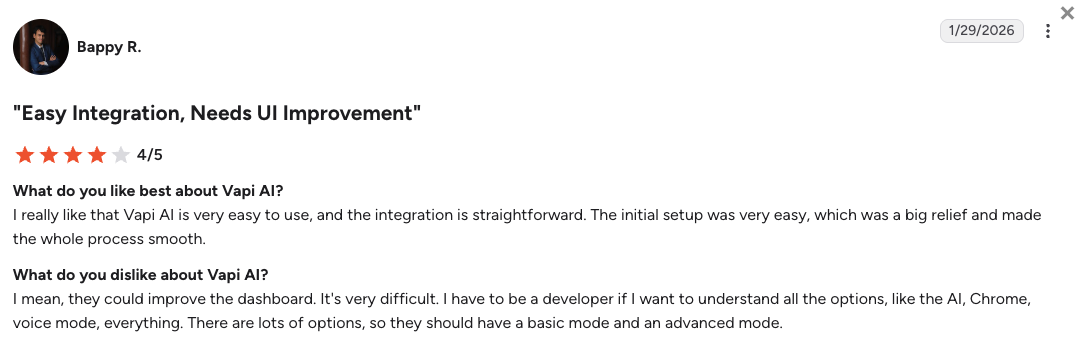
"I mean, they could improve the dashboard. It's very difficult." (Bappy R., G2)
Pricing
Per the Vapi pricing page, the platform orchestration fee starts at $0.05 per minute, with model and telephony costs passed through. Real all-in cost typically lands between $0.13 and $0.31 per minute. Every account includes 10 concurrent call slots by default, and Enterprise pricing is custom.
Bottom Line
Vapi rewards orgs with engineering capacity that want to tune every layer and own their CRM integration. If you want one bundled invoice, look at a packaged platform instead.
6. Sierra: Best for Enterprise Multichannel Agents
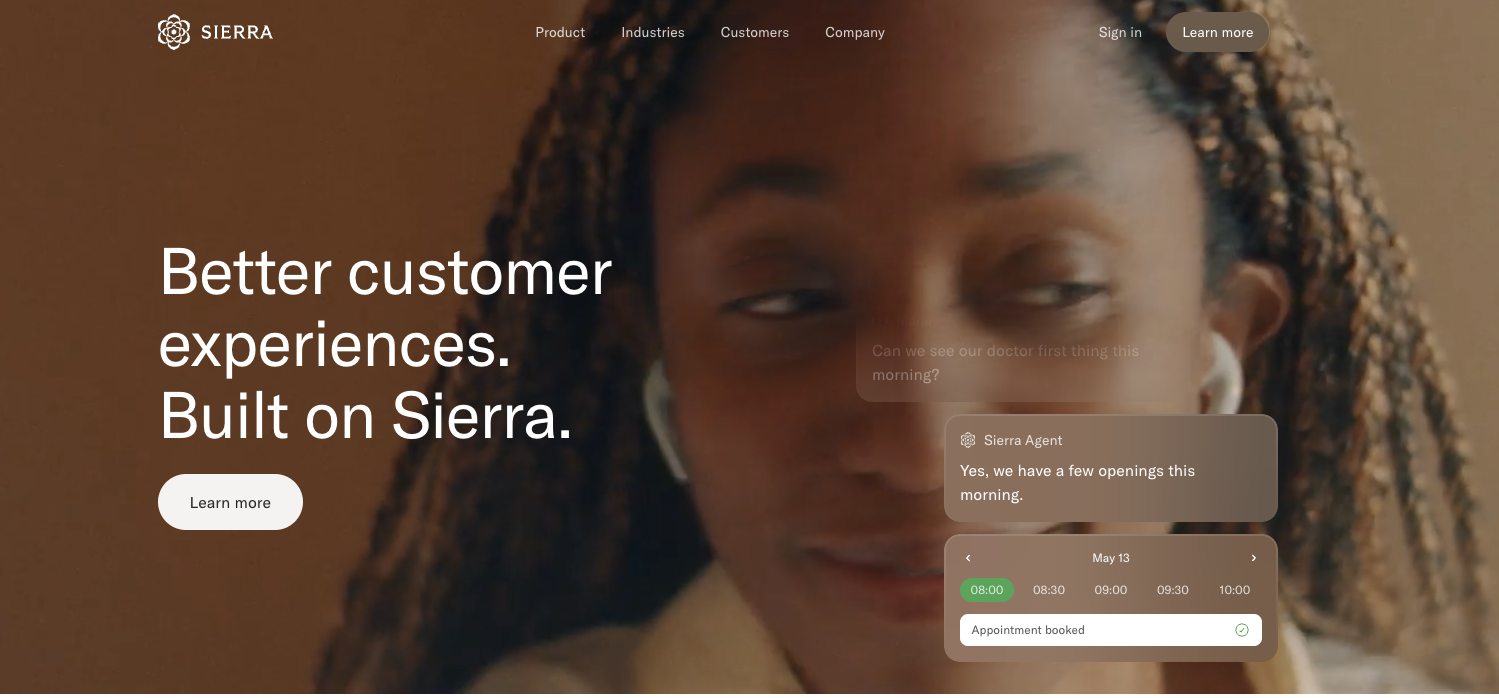
What it does: Sierra is an enterprise AI agent platform, co-founded by former Salesforce co-CEO Bret Taylor, that runs agents across voice, chat, SMS, and email while taking CRM actions mid-conversation.
Best for: Enterprise CX operations that want one agent taking real actions across channels, tied into their existing systems.
Sierra models each interaction as a journey and defines what the agent needs to access and which tools it can call to complete a task.
In testing documented in the Cekura appointment-booking guide, a Sierra agent handled a multi-step booking with rescheduling and live CRM updates across channels without losing booking state. Sierra also stands out for its pricing philosophy, which the company ties to outcomes rather than seats.
Key Features
- Journeys: define end-to-end customer flows and the tools an agent can use in each.
- Multichannel agent: one configuration runs across voice, chat, SMS, WhatsApp, and email.
- Mid-call actions: the agent books, updates, and triages inside connected systems during the conversation.
Pros and Cons
Pros:
✅ One agent carries context across channels, so callers avoid repeating themselves.
✅ Outcome-based pricing aligns cost with resolved work.
✅ Built to complete real actions during the call.
Cons:
❌ Configuring guardrails for complex flows takes longer than expected.
❌ Enterprise-only motion means no self-serve path in.
What Users Say
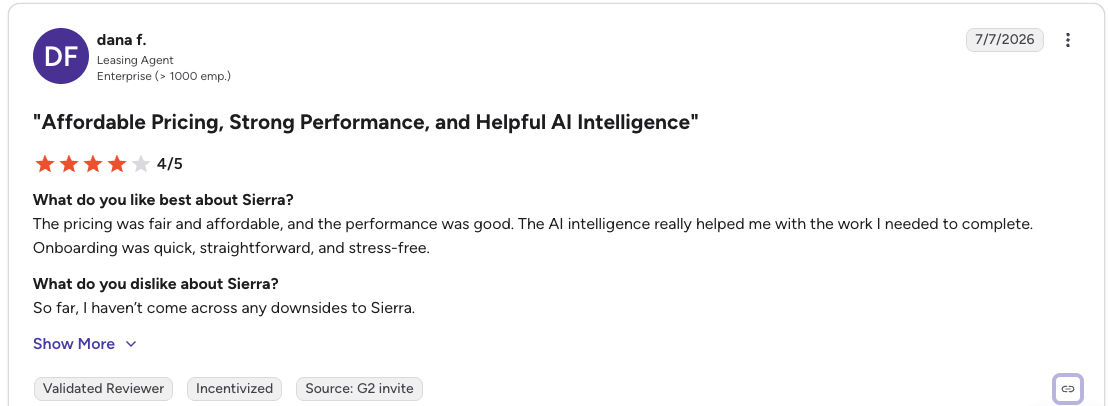
"The AI intelligence really helped me with the work I needed to complete" (Dana F., G2)
"very complex setup process and more bugs then competitors" (Giorgi M., G2)
Pricing
Sierra uses outcome-based pricing, tied to resolved outcomes rather than per-seat licensing. Pricing is custom, so contact Sierra for a scoped quote.
Bottom Line
Sierra suits enterprises that want an action-taking agent across every channel and prefer paying for outcomes. Budget for guardrail design before your first live call.
7. Hyro: Best for Deep EHR Integration
What it does: Hyro is a healthcare-native conversational AI platform that automates patient interactions across voice, chat, and SMS, with bi-directional Epic EMR and Salesforce sync.
Best for: Health systems running Epic that need an agent to complete scheduling and record updates during the call.
Hyro frames the real test for healthcare voice AI directly by asking, can the platform schedule an appointment that appears in Epic within seconds of the call ending? Its agents use a knowledge graph instead of intent training and automate up to 85% of repetitive patient interactions.
Key Features
- Epic and Salesforce sync: automates patient record lookup, scheduling, and CRM conversations both ways.
- Knowledge graph: adapts to changing information without manual flow-building.
- Omnichannel automation: one agent runs across voice, web chat, mobile, and SMS.
Pros and Cons
Pros:
✅ Purpose-built for healthcare, with deep Epic and Cerner integration as a core capability.
✅ No-code deployment ingests your site and systems, often live in four to eight weeks.
✅ HIPAA compliance with a BAA included.
Cons:
❌ Economics do not work at low call volumes, so small practices are priced out.
❌ Outbound campaigns and recall are limited, since Hyro is inbound-first.
What Users Say
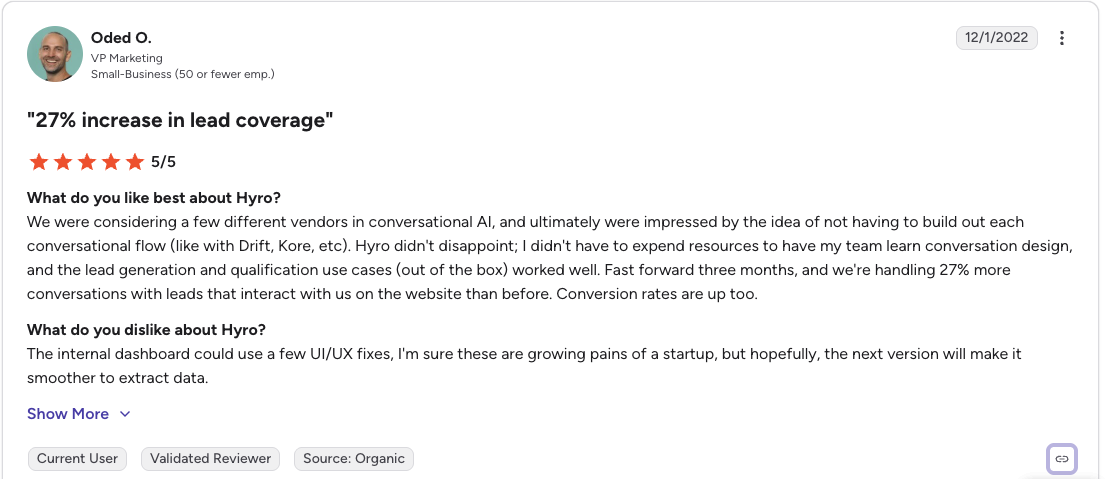
"We're handling 27% more conversations with leads that interact with us on the website than before" (Oded O., G2)
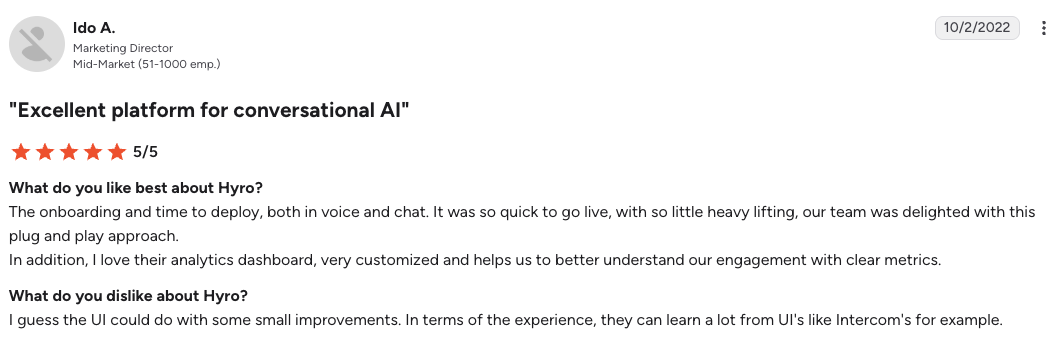
"I guess the UI could do with some small improvements." (Ido A., G2)
Pricing
Hyro uses enterprise pricing scoped to call volume and integrations. Contact Hyro for a quote sized to your health system.
Bottom Line
For an Epic-centric health system where the EHR is the true system of record, Hyro completes the workflows patients call about. For a small practice or an outbound-heavy use case, the fit is weaker.
Which Voice CRM Platform Should You Choose?
It makes sense to match the tier to where your data already lives.
Choose Salesforce Agentforce if you:
- Run Salesforce as your system of record and want voice actions on live data.
- Have Service Cloud in place and can model action-based consumption cost.
Choose Retell AI or Vapi if you:
- Have engineering capacity and want to own the voice-to-CRM path down to the function call.
- Prefer usage-based pricing and full control over your model and voice stack.
Choose Talkdesk or Hyro if you:
- Operate in healthcare and need the agent to read and write the EHR during the call.
- Run Epic or Oracle Health and want scheduling completed during the call.
Choose Cognigy or Sierra if you:
- Run high volumes across many channels and languages.
- Want agentic AI taking real CRM actions inside an enterprise CX stack.
Skip this category if you:
- Only need post-call logging, since a lighter voice tool that syncs after hangup will do.
Final Verdict
The top conversational AI platforms with voice CRM separate along one line, which is how deeply the agent couples to your system of record. Agentforce and Hyro win on native depth inside Salesforce and Epic.
Retell and Vapi win on control for engineering-led orgs. Talkdesk wins on healthcare CCaaS breadth, Cognigy on global multichannel scale, and Sierra on outcome-aligned action-taking.
The best approach is to pick the tier that matches your CRM, then pressure-test the write path before real callers find the gaps.
Validate the Voice-to-CRM Path Before Real Callers Do
Test voice-to-Salesforce CRM mapping with a fixed example: the caller gives a name and preferred appointment time, the agent checks the values, and the integration writes them to the intended record fields. Then test an ambiguous date and an existing duplicate contact. The pass condition should include the correct record, correct values, and no duplicate write—not only a successful API response.
Every platform above shares one blind spot. None of them tells you whether the CRM write actually fired correctly across thousands of messy, interrupted, off-script calls. That is a separate layer, and it is where reliability is won or lost.
Cekura is an automated QA and observability platform for voice and chat AI agents, and it’s built to solve that exact problem. It runs simulations that fire the real tool calls before launch, then monitors production calls for write failures, latency spikes, and hallucinations after go-live.
In one Cekura benchmark, a single identical agent ran across six platforms, and the widest gap appeared in workflow recovery, a 33.3-point spread on tool failure and multi-step scenarios. The voice sounded fine on all six. The actions did not hold up equally.
Here is where Cekura fits, bucketed by stage:
- Pre-production: simulate hundreds of caller personas and edge cases, and fire the real CRM tool calls before a single customer dials in.
- Infrastructure: measure latency, interruption handling, and turn-taking under load, the failures that make an agent feel broken even when the logic is right.
- Observability: monitor live calls, flag CRM write failures, and replay known trouble spots after every prompt or model change. See the Cekura guide to voice AI evaluation metrics for the full method.
Cekura connects directly to the stacks you already run. Native integrations cover Retell, VAPI, ElevenLabs, LiveKit, Pipecat, and Bland, so validation sits on top of your current agent with no re-architecture.
For regulated work, Cekura supports SOC 2, HIPAA, and GDPR compliance, covering transcript redaction, role-based access, and audit trails.
Ready to see your voice-to-CRM path tested end-to-end? Book a Cekura demo.
Frequently Asked Questions
What is a conversational AI platform with voice CRM?
A conversational AI platform with voice CRM is software that holds a spoken conversation and reads or writes customer records in your CRM during the call.
It combines speech recognition, an LLM, and text-to-speech with live function calls, so an agent can qualify a lead, book an appointment, or update a contact without a human on the line.
What is the difference between a voice CRM platform and a voice tool that logs to CRM?
The main difference between a voice CRM platform and a voice tool that logs to CRM is timing. A voice CRM platform reads and writes records while the caller is still on the line, so the record stays current mid-call.
A logging tool captures the transcript and pushes a summary after the call ends, which leaves a manual step in between.
Can voice AI write to an EHR like Epic?
Yes, voice AI can write to an EHR like Epic. Platforms such as Talkdesk and Hyro connect through FHIR APIs to schedule, reschedule, and update patient records during the call. Write depth varies by EHR and vendor, so confirm bi-directional support and your BAA scope during the pilot.
Which platform is best for a small practice versus an enterprise contact center?
A small practice is usually better served by a lighter, no-code voice tool, since enterprise platforms like Hyro and Cognigy need volume to justify their cost.
An enterprise contact center gains more from Talkdesk, Cognigy, or Agentforce, which handle high volumes and deep CRM or EHR coupling across channels.