
A white label AI voice agent is a phone agent that one company builds on another company's platform and sells under its own brand. Your client sees your name, your dashboard and your invoice. The platform underneath still decides how the agent sounds, how fast it answers and how often it fails.
TL;DR
- The agent you resell has seven layers, and an agency usually controls only the top one: the prompt, the workflows and the client relationship.
- There are three ways to get one: a platform with native agency features, a wrapper dashboard on top of a developer platform, or a custom build.
- If the agent places outbound calls, US rules treat its AI voice as an "artificial" voice. That means prior express consent, and the agent has to say who is responsible for the call at the start of it.
- The platform choice changes results a lot. In one July 2026 study of a single Medicare sales agent, the same agent passed between 65.2% and 95.7% of its workflow checks on all three runs, depending on the platform it ran on. That is one agent in one workflow, so read it as the size of the spread, not a ranking.
- Test every client template before launch, run each scenario more than once, and re-test whenever the platform or the model underneath changes.
What is a white label AI voice agent?
In practice, you resell a voice agent under your own brand while someone else runs the infrastructure. The buyer is usually a local business or a mid-market team that wants calls answered or placed. The seller is an agency, a managed service provider or a software company adding voice to its product.
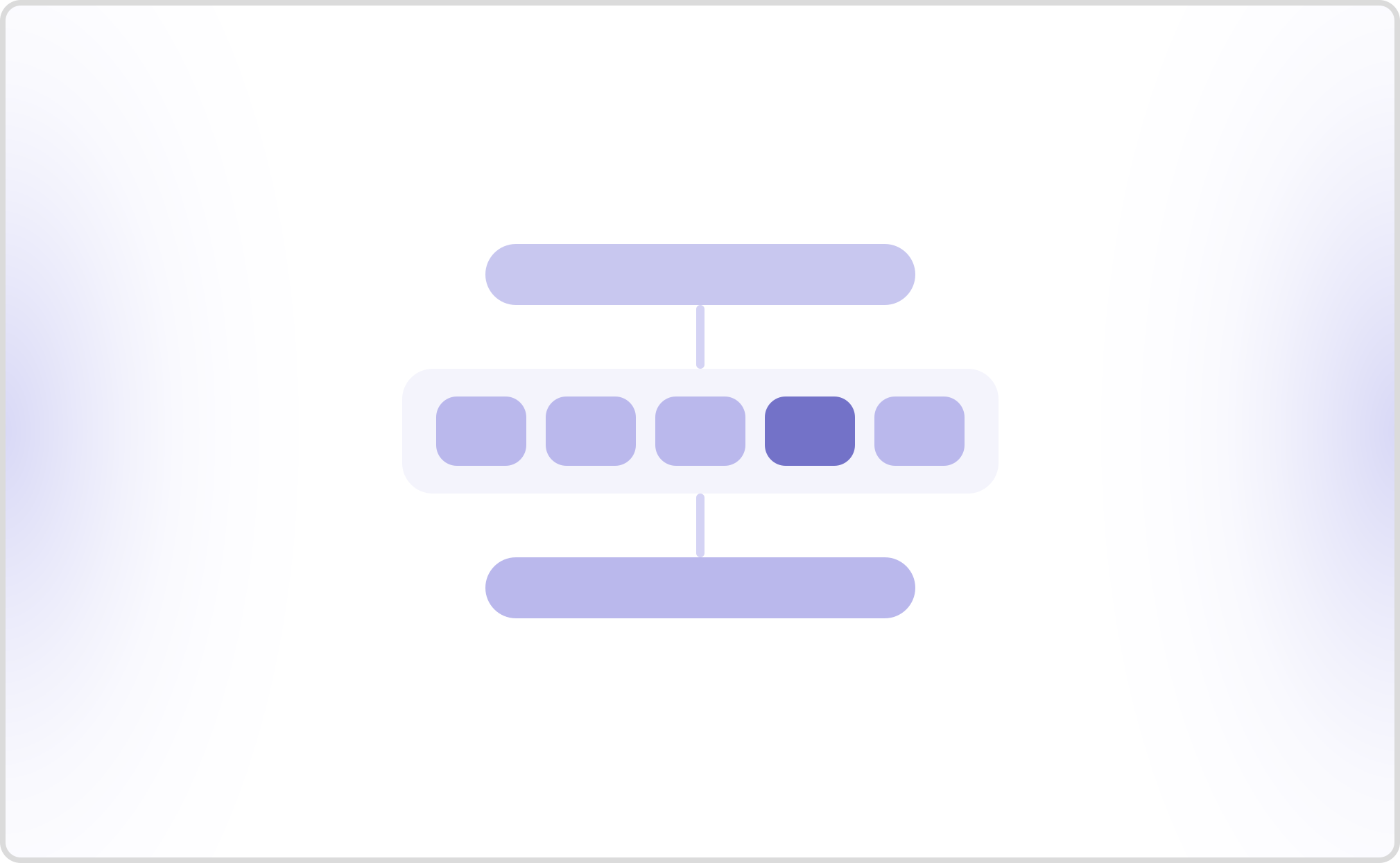
The word "agent" hides a stack. Each layer can change without your client noticing, and each one can break the call.
| Layer | What it does | Who usually controls it |
|---|---|---|
| Phone number and carrier | Routes the call and sets caller ID | Platform or telephony provider |
| Speech to text | Turns the caller's audio into words | Platform, sometimes configurable |
| Language model | Decides what to say and which tool to call | Platform, often selectable |
| Text to speech | Turns the reply into audio | Platform, often selectable |
| Orchestration | Handles turn-taking, interruptions and tool calls | Platform |
| White label layer | Branded dashboard, sub-accounts, billing | Platform or wrapper vendor |
| Prompt, workflows and client | What the agent is for, and who pays | You |
The table explains an uncomfortable fact about this model: when a call goes wrong, the client blames the brand on the invoice, and that brand is yours.
How do agencies build a white label voice agent today?
Agencies take one of three routes. Each one trades speed against control.
1. A platform with native agency features. Some voice platforms ship the white label layer themselves. Synthflow's agency and white label documentation describes subaccounts you can create and delete, a custom domain, branding controls for name, logo, theme and colour, per-subaccount limits, and control over which features and integrations each subaccount can use. This is usually the quickest route to a first client. The cost is that you inherit that platform's roadmap and its limits. Before you sign, check whether the platform appears in public benchmark studies, such as the one covered below, and read its strict end-to-end score, not just its headline figure.
2. A wrapper dashboard on a developer platform. Developer platforms are built around APIs. Third-party wrapper products sit on top of those APIs and add the portal, the client logins and the rebilling. Vapi's own documentation lists one of them, Voicerr, a white label portal built on Vapi's APIs that adds a branded site on your own domain and automated Stripe billing. This route keeps you closer to the underlying platform's features. It adds a second vendor between you and the call, and a second place where things can break.
3. A custom build. You assemble the stack yourself on a framework such as LiveKit or Pipecat, then build your own client dashboard. You control every layer and can swap components freely. You also carry the engineering, the on-call load and the testing.
None of the three routes is safer by default. What changes is which failures you can see and which ones you can fix.
White label voice AI or a white label AI agent: which are you selling?
The two secondary terms buyers search for describe different products, and mixing them up leads to a scope argument three months into a contract.
| Term | What it usually means | Main channel | What the client judges you on |
|---|---|---|---|
| White label voice AI | Branded voice technology: a voice agent, or just a branded voice and speech layer | Phone and web calls | How natural it sounds, how fast it answers, and whether calls complete |
| White label AI agent | Any rebranded AI agent: chat, email, voice or all three | Mixed | Resolution rate across channels |
| White label phone agent | A phone agent that answers or places calls end to end under your brand | Phone | Whether the caller's task got done, and whether the call was compliant |
If you sell a white label AI agent that covers chat and voice, write the voice scope separately. Voice fails in ways chat does not: a caller talks over the agent, a line is noisy, a phone number is misheard. A chat pass rate tells you nothing about any of that.
Who is the caller when a white label AI voice agent dials out?
In the United States, it is not the platform you hid. In February 2024 the FCC issued Declaratory Ruling FCC 24-17, confirming that the Telephone Consumer Protection Act's limits on "artificial or prerecorded voice" calls cover AI technologies that generate human voices. Three obligations follow for an outbound white label agent:
- Prior express consent. The ruling says callers using these technologies must get the called party's prior express consent, unless there is an emergency purpose or an exemption applies.
- Identification at the start. Under 47 CFR 64.1200(b)(1), the message must, at the beginning, "state clearly the identity of the business, individual, or other entity that is responsible for initiating the call." For a business, that means the name it is registered under.
- A callback number and opt-out. The same section requires a telephone number during or after the message. Where the call is telemarketing or includes an advertisement, it also has to offer the opt-out mechanisms the rule specifies.
The ruling says these requirements apply to any AI technology that initiates an outbound call to consumers using an artificial or prerecorded voice. White labeling can hide the platform. It cannot hide the business responsible for the call. Decide in the contract whether that business is you or your client, then script the agent's first sentence to match.
Two practical points follow. First, the identity statement is a test case, not just a script line. It has to survive a caller who interrupts in the first three seconds. Second, the ruling addresses calls the agent initiates, so an agent that only answers inbound calls is not what its consent requirement targets. But recording, privacy and sector rules can still apply. This is not legal advice, so have counsel review the scripts for each client's industry and state. For a fuller map of which rules can be tested, see this guide to AI voice agent compliance.
What does the platform under your brand decide?
The platform decides more than most agencies expect, and research on voice agents shows why a demo is weak evidence.
The tau-Voice benchmark, a March 2026 preprint from researchers at Sierra and Princeton, tested voice agents on 278 grounded customer-service tasks in retail, airline and telecom. The voice agents completed 31% to 51% of tasks in clean audio and 26% to 38% with realistic noise and diverse accents, while the best reasoning text model reached 85%. The authors found accents were the most damaging factor, and that the effect varied sharply by provider. These are paper-era models, and the accents were synthetic. The direction still matters for resellers: a quiet demo overstates how the same agent performs on a real client's phone line.
Cekura's benchmarks isolate the platform effect more directly. In a Medicare workflow study from July 2026, the same byte-identical Medicare sales agent ran on six platforms against 23 evaluators, three times each. Workflow pass³, the share of evaluators passed on all three runs, ranged from 65.2% to 95.7%. One platform scored 69.6% on workflow pass³ but 8.7% under strict end-to-end grading, because long silences and tool-runtime failures often stopped callers from finishing. This is one agent in one regulated workflow, so treat it as a sign of how large the spread can be, not as a ranking for your use case.
The model underneath matters too. The same site's voice agent workflow benchmark reports a controlled experiment on a single platform in which only the LLM changed: pass³ moved from 76.3% with gpt-4.1 to 88.1% with Kimi K2.6. If the platform under your brand changes its default model, your client's agent changes with it, whether or not anyone touched the prompt.
How do you test a white label AI voice agent before each client goes live?
Test the agent the way the client's callers will use it, not the way the demo went. Cekura's benchmark notes on individual platforms show the kinds of failure that reach a client's ears: a phone number transcribed correctly but a different number sent to the booking tool, an agent narrating a tool call and continuing with an invented result, and an opening interruption that pushed the agent past a required disclosure.
- Write one scenario suite per client template. Cover the happy path, the caller with two requests, the caller who is out of scope, and the caller who gives a wrong or partial answer. Cost: most of the scenario writing happens once per template, and each client cloned from it needs only its own details added.
- Test the disclosure under interruption. Have a simulated caller talk over the first sentence and check that the identity statement and any recording notice still get delivered. This is the one failure with a regulatory cost.
- Check tool arguments, not just transcripts. Compare what the caller said with what the agent sent to the calendar, CRM or transfer tool. A clean transcript can hide a wrong phone number.
- Run every scenario three times. On Cekura's leaderboard, the top configuration passed 62 of 82 scenarios on all three retained runs, so roughly one scenario in four failed at least one of its runs even on the best-ranked configuration. A single pass is not a measurement.
- Re-test after any change you did not make. Platform releases, model swaps and voice changes all count. Keep the suite as a regression test and run it on a schedule, not only when a client complains.
- Monitor production calls per client. Tests find what you thought to ask. Live monitoring finds what callers actually do.
Cekura is built for this loop. Cekura tests voice and chat agents with simulated callers, monitors production calls, and helps teams improve the agent from what both show. Cekura connects to Retell, Vapi, ElevenLabs, LiveKit, Pipecat and Bland AI, and to agents reachable over SIP, so the platform under your brand does not decide whether you can test it.
For agencies, Cekura's project structure maps onto a client book. The documentation recommends keeping many similar agents, such as receptionist agents for several clinics, in one project so they share metrics and evaluators, and splitting staging from production. Cekura's access roles (Admin, Member and Viewer) are scoped to the project, so if a client will log in to see their own results, give that client their own project. For results inside your own branded dashboard, pull them through the API.
How do you choose the platform under your brand?
Choose on what you will have to answer for, not on how fast the logo swap is. Ask each vendor these questions before you sign.
| Question | Why it matters to a reseller |
|---|---|
| Can each client be isolated, with separate data, limits and logins? | One client's recordings must never show up in another's dashboard |
| Will you tell us before the default model or voice changes? | A silent model change changes every client's agent at once |
| Can we export call recordings, transcripts and tool calls? | You cannot test or defend a call you cannot see |
| Is there an API or SIP endpoint we can test against? | Without one, testing means manual calls |
| How are caller ID and the opening identity line configured per client? | Outbound calls must identify the responsible business at the start |
| What happens to a call when a tool times out? | Long silence is where strict-graded calls failed in the Medicare study |
| Which certifications and attestations (SOC 2, ISO 27001) and which HIPAA commitments apply, and to which layer: the dashboard, the platform, or the speech vendors underneath? | A compliant dashboard on a non-compliant voice layer is not compliant |
If you are weighing the business model itself, including which route earns more per client, this guide to running an AI voice agent agency covers the economics. If you are also considering reselling the testing layer, see the companion piece on a white label voice AI testing platform.
Frequently asked questions
What is a white label AI voice agent?
It is a phone agent built on another company's voice platform and sold under your brand. The client sees your name and dashboard. The vendor runs the speech, language model and telephony layers underneath, and those layers set most of the agent's quality.
Is a white label AI voice agent legal for outbound calls?
Yes, with conditions. In the United States, FCC ruling 24-17 treats AI-generated voices as artificial voices under the TCPA, so outbound calls to consumers need prior express consent absent an emergency or exemption. They also need an identity statement for the responsible business at the start, and a callback number. Have counsel review each client's scripts.
How much does a white label voice agent cost to run?
It depends on the route. Native agency platforms and wrapper dashboards typically combine a platform fee with per-minute usage for speech, model and telephony, while custom builds swap the platform fee for engineering time. Budget for testing and failed calls too, because repeat calls and refunds come out of your margin, not the vendor's.
Can I test a white label AI voice agent I did not build?
Yes, if the platform exposes a phone number, SIP endpoint or API. Cekura runs simulated callers against agents on Retell, Vapi, ElevenLabs, LiveKit, Pipecat, Bland AI and SIP, and scores each call on the metrics you define. That lets you test the agent your client hears, whichever platform sits underneath.
What should you test first on a white label voice agent?
Start with the opening disclosure under interruption, then tool arguments such as phone numbers and dates, then the happy path run three times. Those three catch the regulatory failure, the silent data failure and the flaky pass that a single demo call hides.
Cekura runs this testing and monitoring for teams that build voice agents for other businesses. If you resell voice agents, book a Cekura demo and bring one client template: you will leave with a scenario suite you can run on every clone.