Monitoring ElevenLabs voice agents in production requires specialized tools that can track audio quality, latency, and real-time interaction across the full voice pipeline (STT → LLM → TTS).
Voice agents built on ElevenLabs combine multiple systems and real-time behavior that must be observed together:
- Speech-to-text (STT)
- LLM reasoning
- Text-to-speech (TTS)
- Real-time streaming and turn-taking
In production, failures rarely come from a single component. They appear as latency spikes, interruptions, missed tool calls, or degraded voice output. Cekura is a tool designed specifically to monitor ElevenLabs-powered agents in production, with full-stack observability across voice, reasoning, and real-time interaction.
Monitoring ElevenLabs Agents in Production: What Needs to Be Tracked
Effective monitoring for ElevenLabs voice agents requires visibility into:
- End-to-end latency (input → response audio)
- Audio generation performance (TTFA, streaming delays)
- Turn-taking and interruptions
- Conversation accuracy and hallucinations
- Tool call execution and workflow correctness
- Concurrency, load, and system reliability
Generic monitoring tools do not capture these signals at the voice layer. Production monitoring for ElevenLabs agents requires audio-aware and real-time metrics.
End-to-End Observability for ElevenLabs Voice Agents
Cekura provides end-to-end monitoring for ElevenLabs-powered agents in production, covering the full voice pipeline with latency and failure detection mapped to specific stages.
- Input → STT → LLM → TTS → output audio
- Latency tracked at each stage (mean, P50, P90)
- Failure detection mapped to specific components (timeouts, silence, drop-offs)
Supports:
- Real-time ingestion of production transcripts and audio
- Post-call analysis immediately after completion
- API ingestion from ElevenLabs, Retell AI, and Twilio
This enables teams to monitor ElevenLabs agents in production without black-box failures.
Audio Quality Monitoring for ElevenLabs Voice Agents in Production
Most tools cannot monitor audio-specific signals for ElevenLabs agents. Cekura tracks a wide range of audio quality and streaming metrics.
- Speech quality metrics
- Words per minute (WPM)
- Talk ratio
- Pitch (Hz)
- Tone and clarity
- Pronunciation accuracy
- Audio failure detection
- Clipping and distorted output
- Silence failures (agent stops speaking)
- Overlapping speech (interrupt collisions)
- Streaming performance
- Time to first audio (TTFA)
- Chunk delays and response gaps
- Buffer underruns
Example: Lindy reduced interruption stop time to <1 second using Cekura, preventing agents from talking over users.
Monitoring Turn-Taking, Interruptions, and Conversation Flow for ElevenLabs Agents
Production issues in ElevenLabs agents often occur during live interaction. Real-time signals around turn-taking, latency, and silence are critical. Cekura tracks:
- Turn-taking and interruptions
- AI interrupting user / user interrupting AI
- Interruption overrun (ms)
- Latency monitoring (end-to-end and per-turn)
- Latency distribution (P50, P90)
- Silence and drop-offs (total silence duration, unexpected pauses)
- Call termination correctness
These signals are critical for monitoring ElevenLabs agents in real-time production environments.
Monitoring Accuracy, Hallucinations, and Tool Calls in Voice Agents
Cekura monitors not just how agents sound, but what they say: validating accuracy, reasoning, and correct workflow execution.
- Accuracy and reasoning
- Instruction adherence
- Relevancy and response consistency
- Hallucination detection
- Tool execution and tool call success rate
- Multi-turn validation and workflow sequencing
- Customer experience (CSAT scoring, sentiment analysis)
- Drop-off detection
Example: Twin Health validates onboarding flows including identity verification, medical intake, and agent handoffs with Cekura.
Why Monitoring ElevenLabs Voice Agents Requires Specialized Tools
Most tools built for LLMs or APIs cannot properly monitor ElevenLabs-powered agents in production. Common gaps include:
- No audio-level observability (TTFA, clipping, tone)
- No streaming performance tracking
- No interruption or turn-taking metrics
- No conversation-level validation
Monitoring ElevenLabs voice agents requires tools designed for real-time audio streaming, voice interaction dynamics, multi-stage AI pipelines, and continuous validation.
Automated Monitoring for ElevenLabs Agents in Production
Manual call review does not scale. Cekura automates monitoring with built-in metrics, custom metric generation, statistical alerting, and real-time notifications.
- 30+ built-in metrics across speech quality, conversational flow, accuracy and reasoning, customer experience
- Custom metric generation using labeled examples and auto-generated evaluation logic
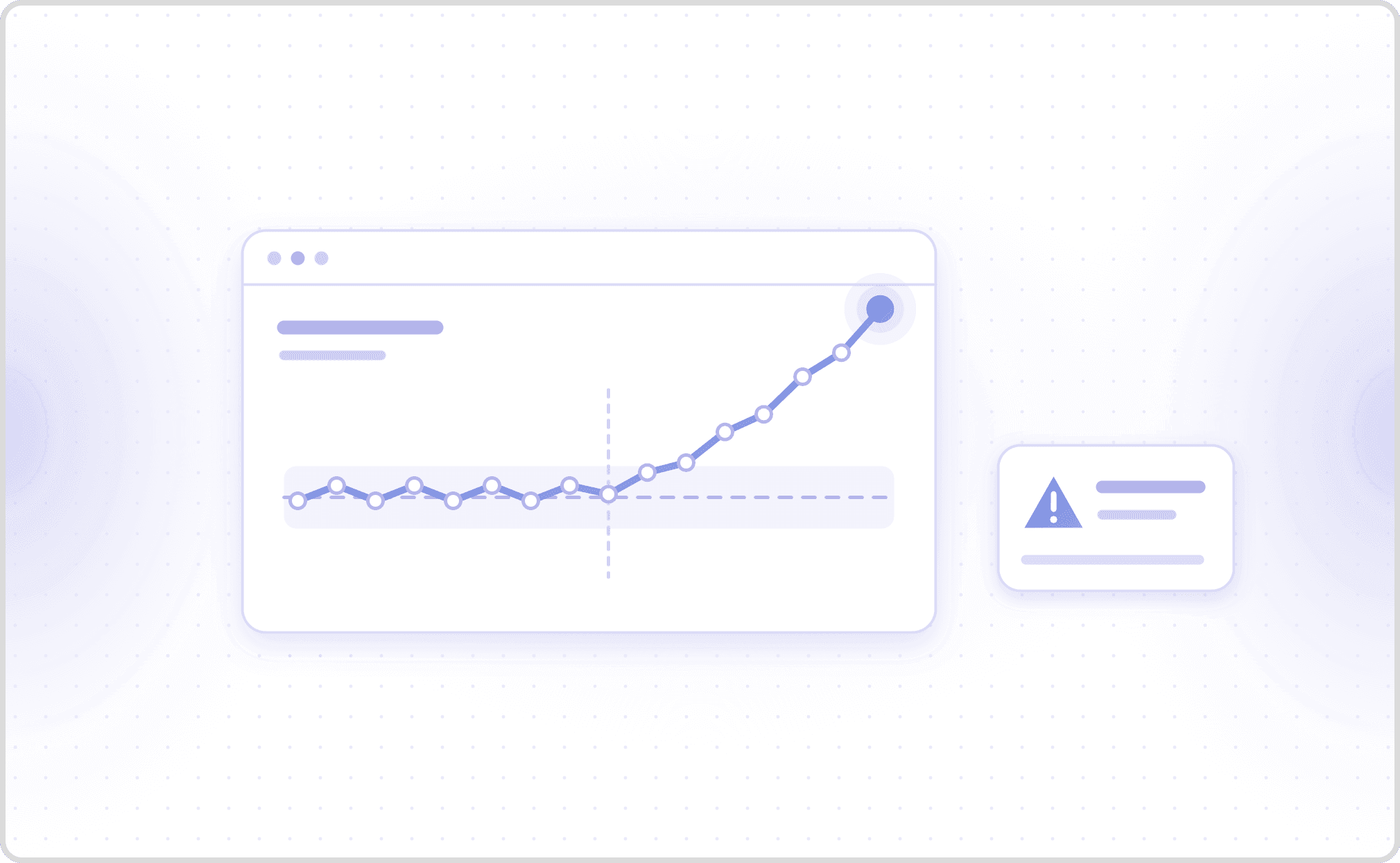
- Statistical alerting that detects deviations from baseline (2σ) — no static thresholds
- Real-time alerts via Slack and email, with metric-level anomaly detection
Monitoring ElevenLabs Agents at Scale (Load, Concurrency, Reliability)
Cekura supports production-scale monitoring to help teams find failure modes under load and validate infrastructure changes.
- Load and concurrency tracking (supports 2000+ concurrent calls)
- Tracks failure rates under load and identifies infrastructure bottlenecks
- Stress testing and simulation of degraded network conditions
- Inject delays and timeouts, replay real production scenarios
Example: Confido Health simulated thousands of calls before infrastructure migration with Cekura.
Continuous Monitoring and Regression Tracking for ElevenLabs Agents
Monitoring ElevenLabs agents is ongoing. Continuous validation compares new runs to historical baselines and verifies fixes before rollout.
- Baseline tracking and persistent regression baselines
- Compare new runs vs historical performance
- Scheduled (cron-based) automated evaluations and continuous health checks
- Replay production calls after fixes to validate improvements
Example: Quo uses Cekura to track agent performance over time and validate every change before release.
Integrating Monitoring with ElevenLabs and Voice Infrastructure
- ElevenLabs (WebSocket + API)
- Retell AI
- Vapi
- LiveKit
- Pipecat WebRTC
These integrations enable direct ingestion of production calls, conversation-level tracking, and tool call timestamps without manual setup.
Security and Compliance for Voice AI Production Monitoring
- PII redaction (audio + transcripts)
- GDPR compliance
- HIPAA-ready infrastructure
- SOC 2–aligned controls
In addition to:
- VPC deployment
- Role-based access control
- Audit logging
Real Production Outcomes from Monitoring ElevenLabs Agents
- Faster iteration: Quo moved from manual QA to automated regression tracking
- Reliable workflows: Confido validated 30+ workflows with no regression during migration
- Real-time interaction quality: Lindy achieved <1 second interruption response, stable talk ratio and WPM, clinical-grade performance
- Workflow correctness: Twin Health ensured correct workflow sequencing and zero data leakage under adversarial scenarios
What Monitoring ElevenLabs Agents in Production Looks Like
Cekura combines audio monitoring (quality, latency, interruptions), LLM evaluation (accuracy, hallucinations, reasoning), real-time system monitoring (failures, load, alerts), and continuous regression tracking (baselines, replay, testing), all tied to real production calls.
For teams deploying ElevenLabs-powered voice agents, Cekura provides full-stack monitoring from speech input to generated audio output, with measurable signals at every step.